The short version
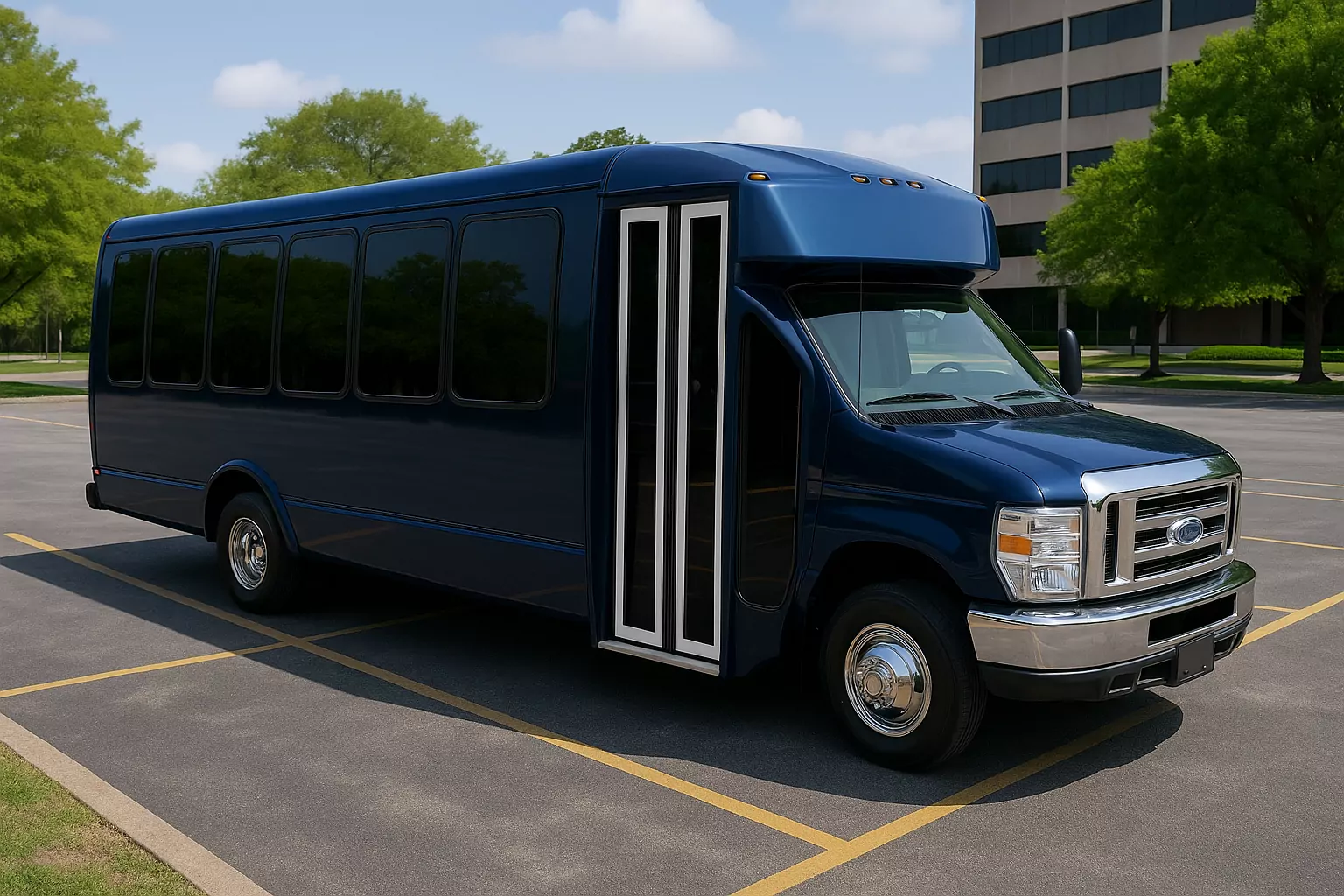
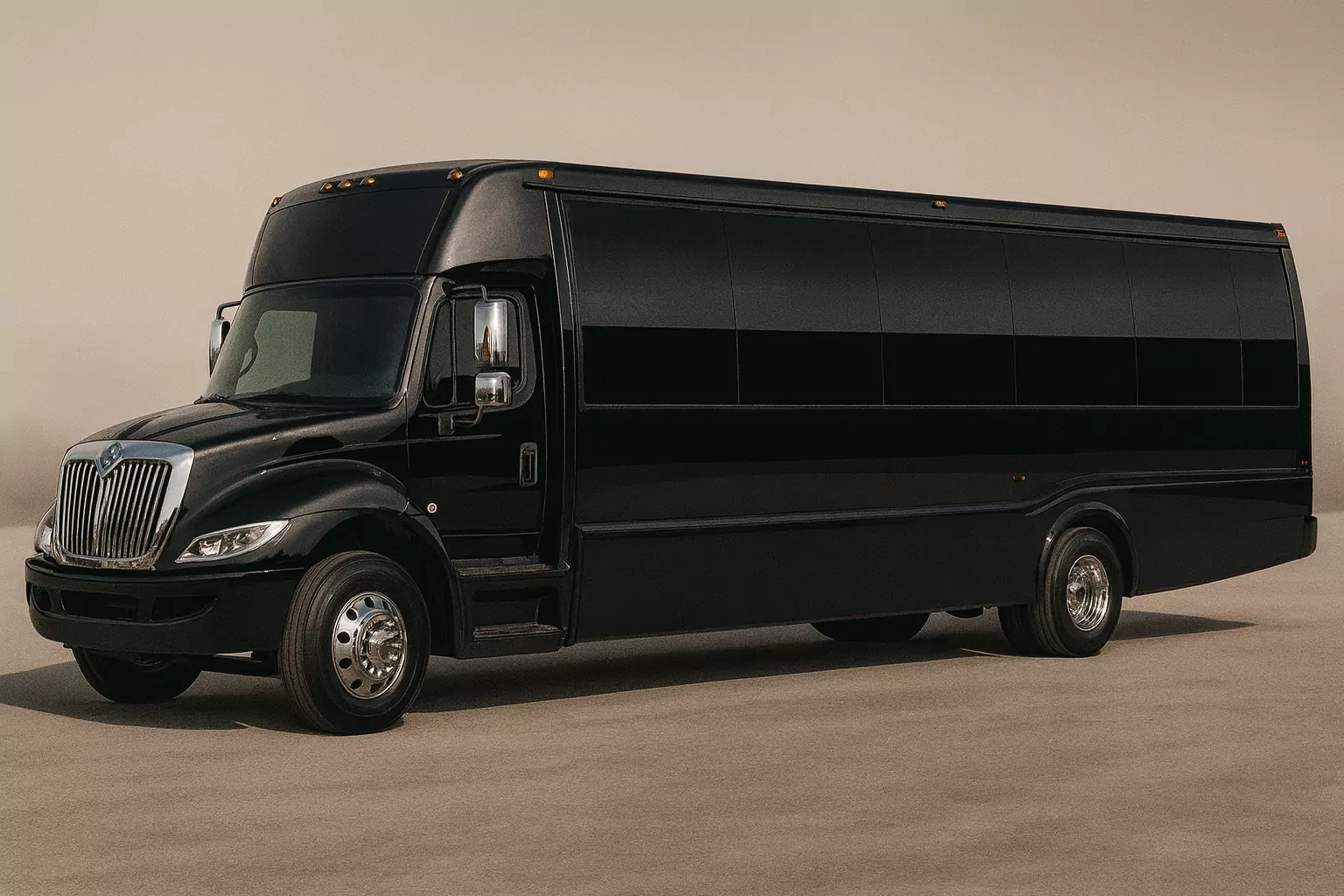
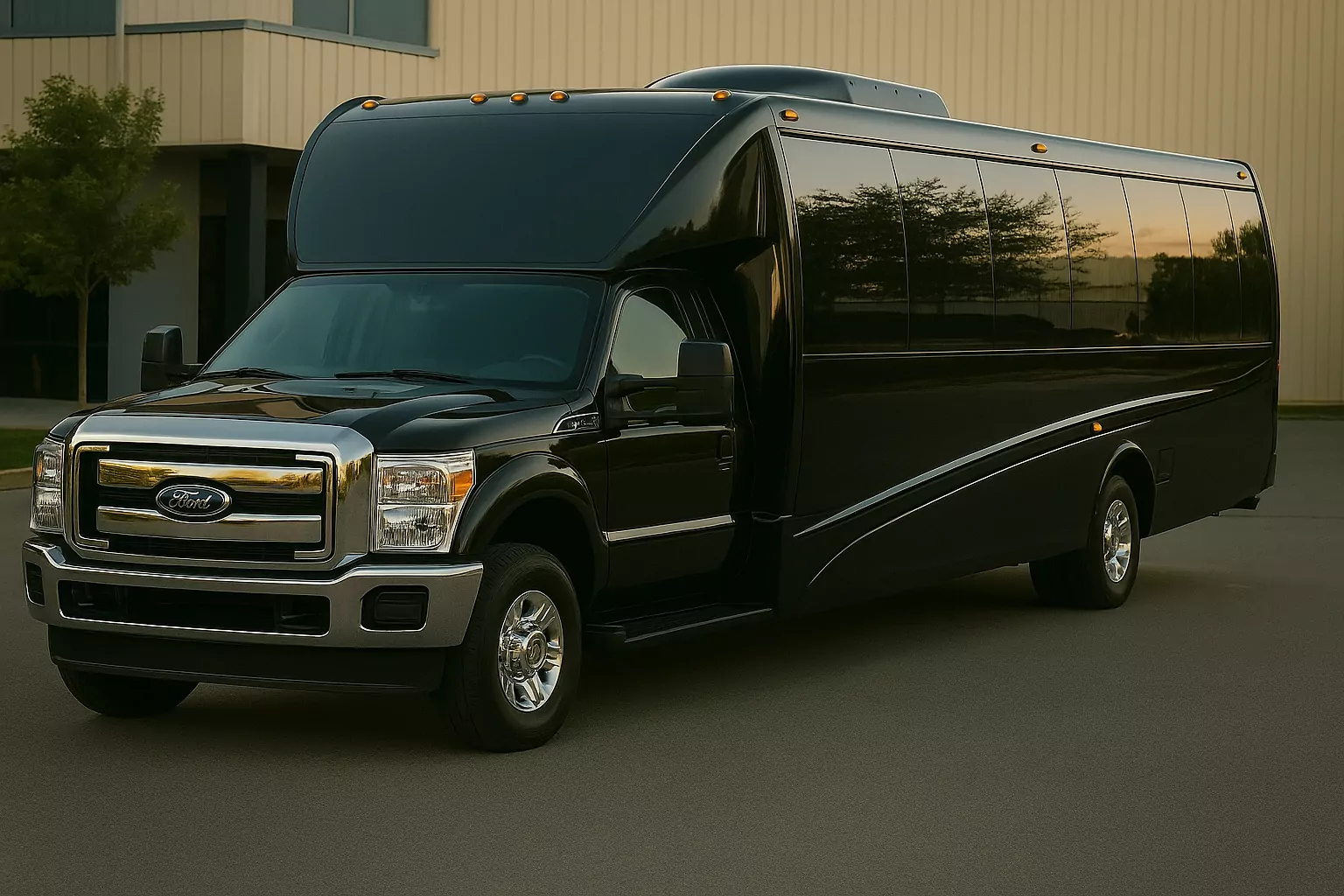
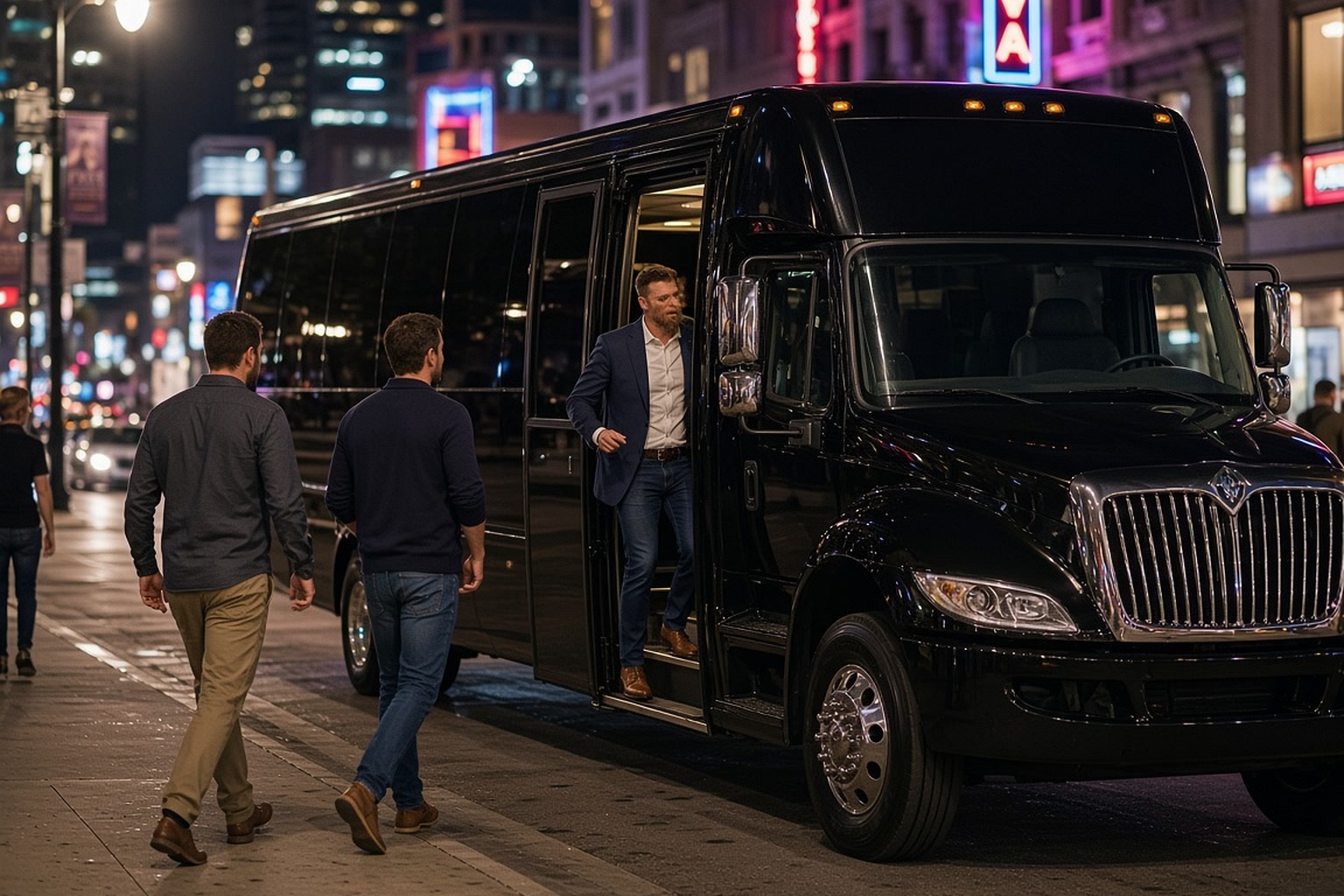
The 26 passenger party bus seats 22 to 26 and is the size Houston groups reach for when two friend groups combine into one night. It has wraparound leather seating, blue LED lighting, multiple flat-screen TVs, Bluetooth sound, an open standing floor, and a bar area with ice and water. Multiple pickups fit inside your booked hours at no extra charge, with a four-hour minimum on weekend nights.
There's a moment about forty minutes in when two circles of friends who have heard about each other for years finally end up on the same bus, and either it clicks or everyone sits with the people they arrived with. That moment is what this page is really about.
Almost nobody books a 26 alone. It's two people — friends born a week apart, a couple whose send-off crews want to meet in the middle, two teams from the same office. Either half would fit something smaller. Together, they need this.
The lists that end up merging
The usual combinations:
- The joint birthday. Two friends a week apart split the planning, and each brings twelve or thirteen people. Tidy arithmetic, natural fit. Our birthday party page has more on planning around a guest of honor.
- The combined send-off. A bachelor party and a bachelorette party eat separately and meet for the second half. Some couples simply do the whole night together.
- Two families, one event. In-laws meeting properly for the first time at the rodeo or a concert, cousins on both sides.
- Neighbors plus coworkers. A fortieth where the host's street and the host's office both turn up.
Every one of those has two centres of gravity. The route, the music, the money, and even where people sit have to work for both halves — otherwise you've got two parties sharing a vehicle rather than one party having a night.
Two pickups, one route, and where the time goes
Nobody pays per stop, and a second address is just another stop. The clock is the thing that isn't unlimited. A second pickup on the far side of town can burn forty minutes before anyone has so much as looked at a menu.
A realistically shaped Saturday for two groups, one out in Katy and one in an Uptown apartment building:
| Time | Stop |
|---|---|
| 6:00 PM | First pickup in Cinco Ranch, Katy |
| 6:45 | Second pickup on Post Oak Boulevard, street side, group waiting outside |
| 7:15 | Dinner in Montrose, reservation for 26 under one name |
| 9:00 | Midtown, two bars within walking distance |
| 10:45 | EaDo for a last stop |
| 11:45 | First drop-off back in Uptown |
| 12:30 AM | Final drop-off in Katy; 6.5 hours booked |
Look at where the hours went. The two suburban legs, out and back, eat about ninety minutes on their own. Have the second group drive to the first group's house and leave their cars, and the identical night fits inside five hours. Two groups in Pearland and the Heights face different geography but the same lesson — one gathering point, whenever you can manage it. The hours planner will add up your own legs honestly.
What the cabin does for a group that's half strangers
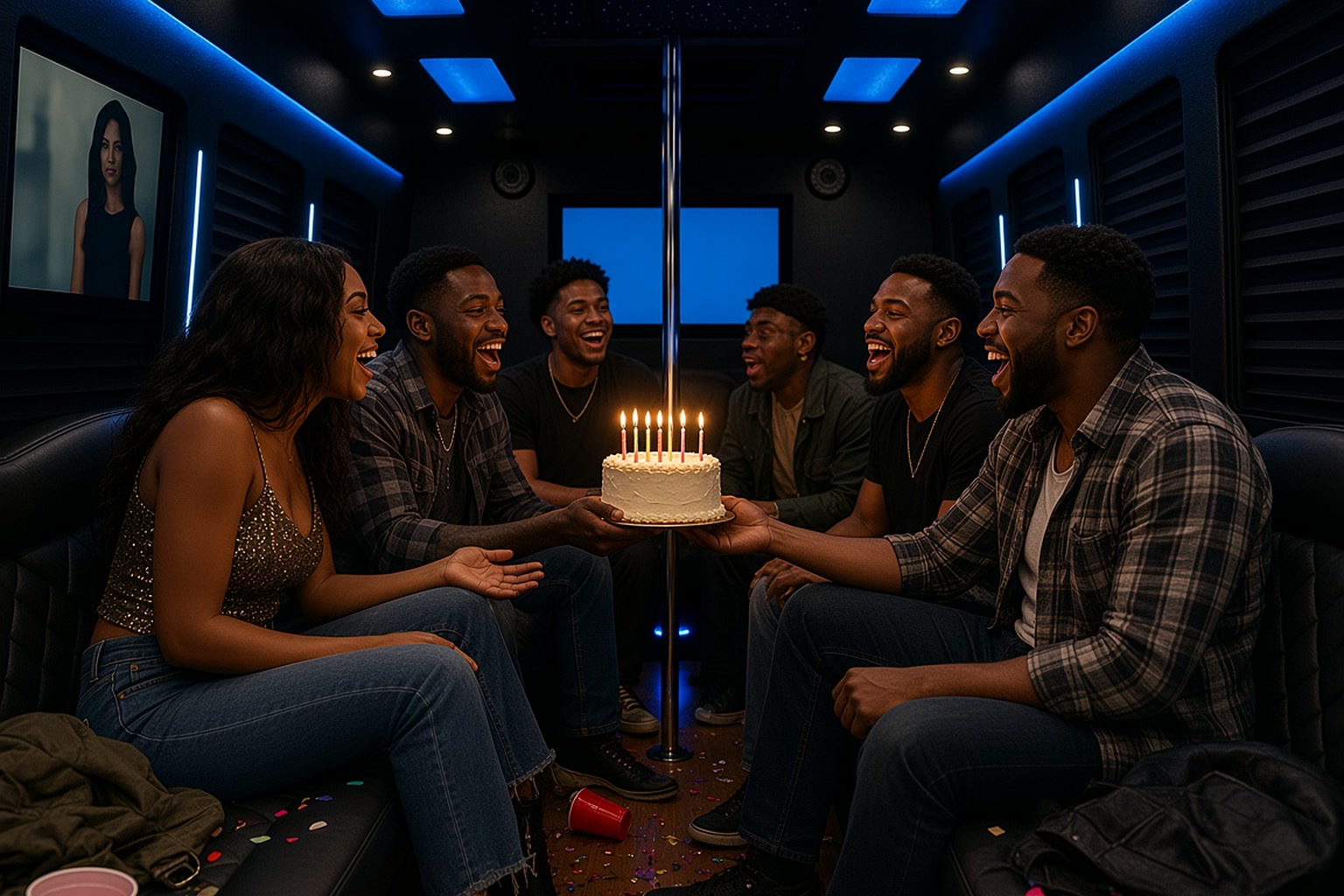
Listed for this bus: wraparound leather seating, blue LED lighting, multiple flat-screen TVs, an open standing floor, a Bluetooth sound system, a bar area with ice and water, and tinted windows, with a professional driver on the route. Which of those the bus assigned to your night actually carries is written into your quote.
Wraparound seating quietly does a lot of work for a merged group. There are no rows and nobody's looking at the back of anyone's head, so the two sides end up facing each other whether they meant to or not. The open floor in the middle gives people somewhere to go at stops instead of staying planted beside whoever they walked on with.
One piece of advice we'd give anybody in this situation: keep the music down for the first twenty minutes. Introductions don't survive a loud playlist, and that opening stretch is when everyone sorts out who's who. Turn it up once the room has loosened.
The screens can break the ice too. If your assigned bus can play your own content, two hosts can build a short slideshow of both guests of honor — one photo from each side — and let it loop on the way to dinner. Ice and water are already in the bar area on arrival, so each side can bring its own cooler without anyone fighting over space.
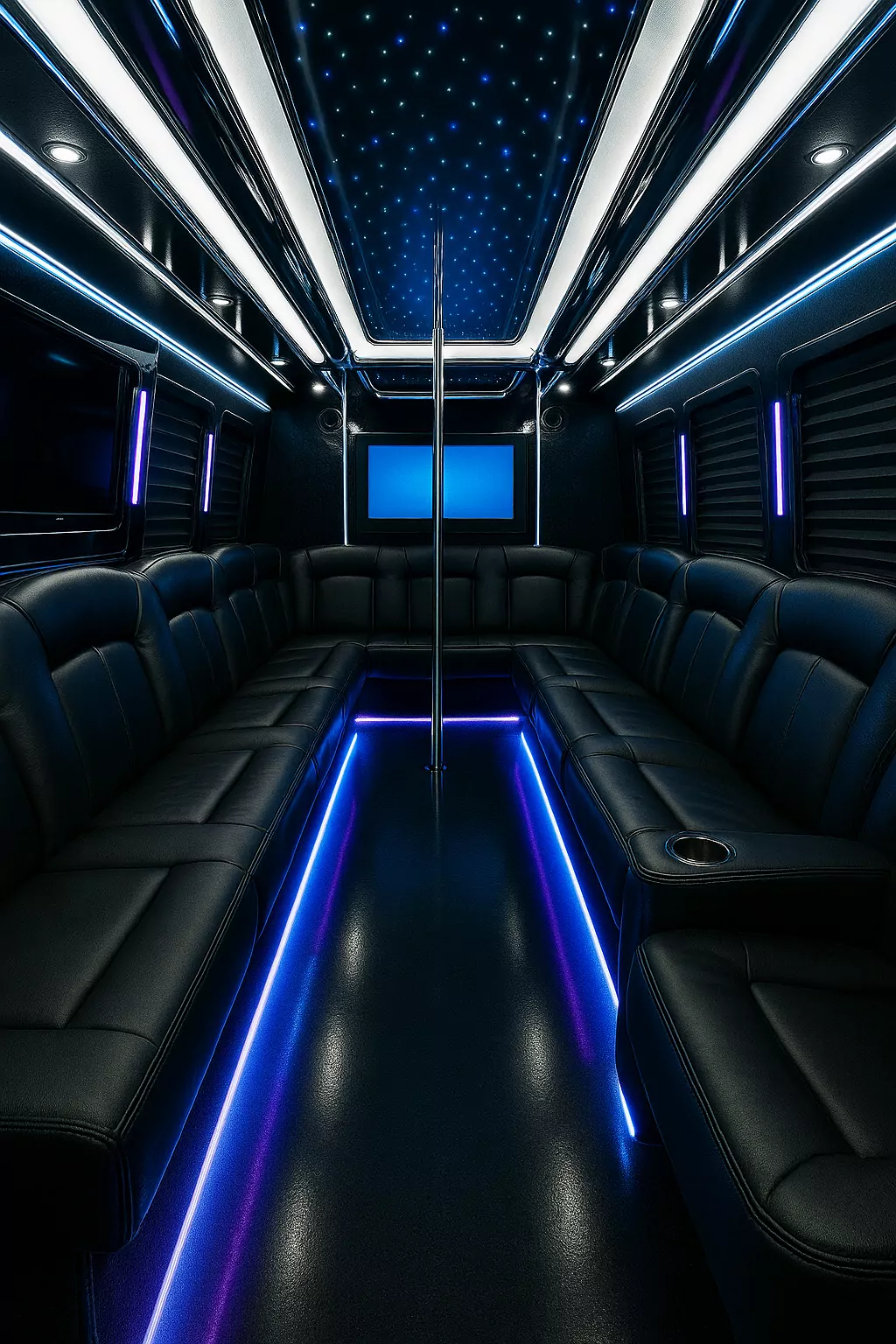 The open floor between the benches is where two groups actually start mixing.
One phone, two sets of taste
The sound system plays from one connected phone at a time. For a merged group the fairest way through that is a shared playlist both hosts add to beforehand, downloaded onto a single handset. Skip that step and the music turns into a tug of war roughly halfway to dinner.
Party buses polls: what would you do?
Quick questions, real tallies. Vote to see how other riders answered — one vote per poll, no sign-up.
Settling the money between two sides
This is where merged nights go sideways. Decide before anyone pays a deposit: even by head, fifty-fifty between hosts, or both guests of honor ride free.
For a sense of scale, the record helps. In our Houston inquiry data, the $1,000 to $1,499 range held about 44% of recorded party bus quotes for the whole trip, with another 15% or so in the $1,500 to $1,999 band — mostly bigger buses and longer nights. Both are history, not a price list.
Say a past total of $1,560 on a full 26-seat bus. By head, that's $60 each. Fifty-fifty between two groups of thirteen comes to $780 a side, which is the same number wearing a different hat. But if one group is sixteen and the other ten, per head is the only split anybody will accept as fair. The calculator below deals with the lopsided versions, guests of honor riding free included.

Free planning tool
Split Cost Calculator
Divide a quote fairly: even split, host rides free, or couples pay as one.
Split the bill →One person still signs and pays the 50% deposit, and they have to be 21 or older. Collect each side's share before the final payment, which lands one to two weeks before the night. Our guide to how booking and deposits work walks through the sequence.
Is 26 your number, or should you move?
About 13% of all the inquiries we receive, and about 16% of the party bus ones, are for 21 to 30 passengers. That's the band two merging groups tend to land in, and it's shared across the 24, the 26, and the 30.
If both lists add up to 21 or 22 and neither is likely to grow, the 24-passenger party bus has you covered. Sitting at exactly 26 with a couple of maybes on each side is a different situation — that's four possible extra riders, so look at the 30-passenger party bus before you commit. Ratings are firm, and nobody gets to stand in the aisle to make room.
Merged lists creep upward, too, because each host feels personally responsible for their own late additions.
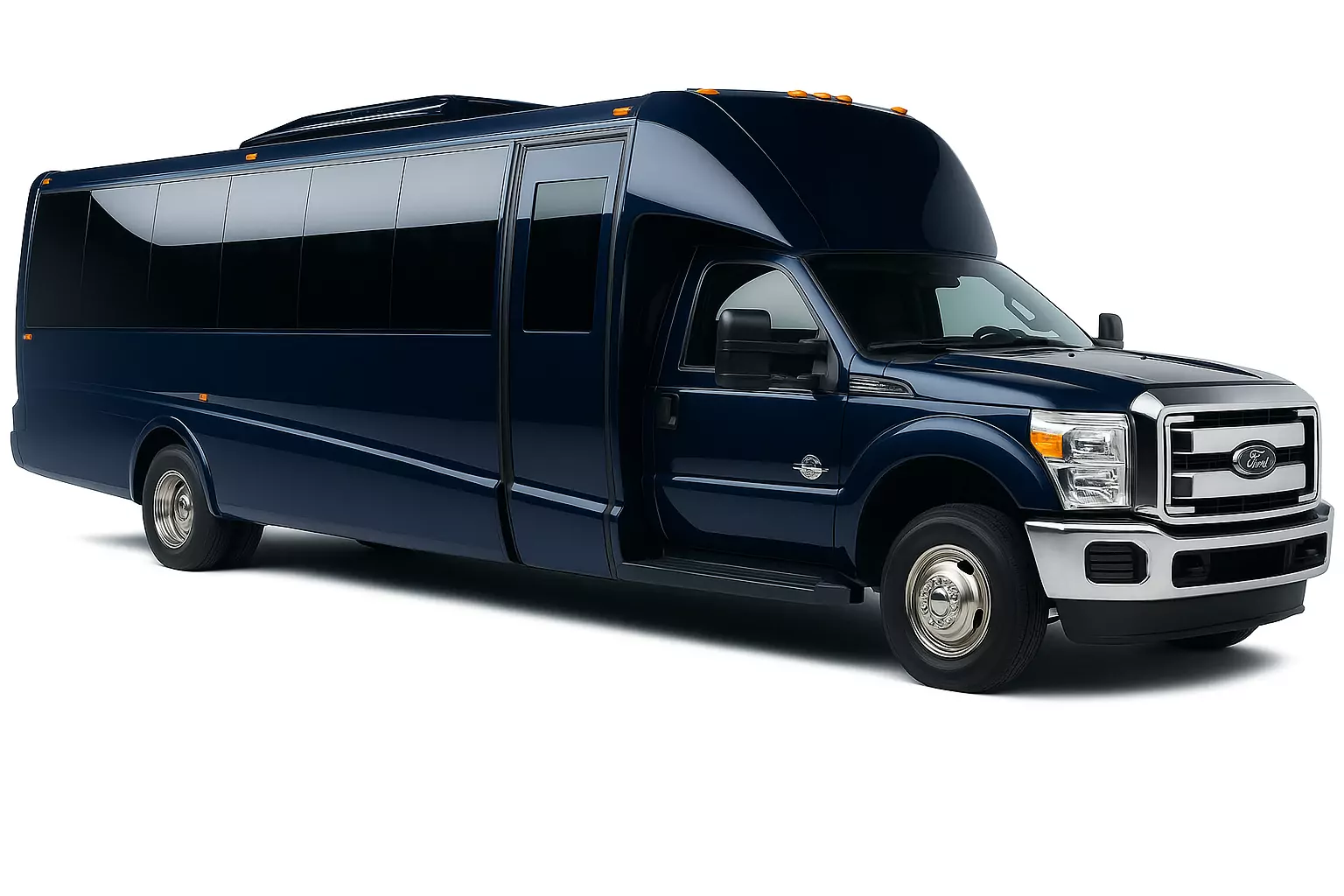 Built on a heavy-duty truck chassis - longer than the 18 through 24 buses.
Where it pulls in easily, and where it won't
This bus is longer than the cutaway buses and drives like it. On commercial strips — Westheimer through Montrose, the bar blocks of Washington Avenue — a driver can generally find a loading spot with enough length. Tight residential blocks in the Heights and Montrose with cars down both sides are the ones where you'll get picked up around the corner instead.
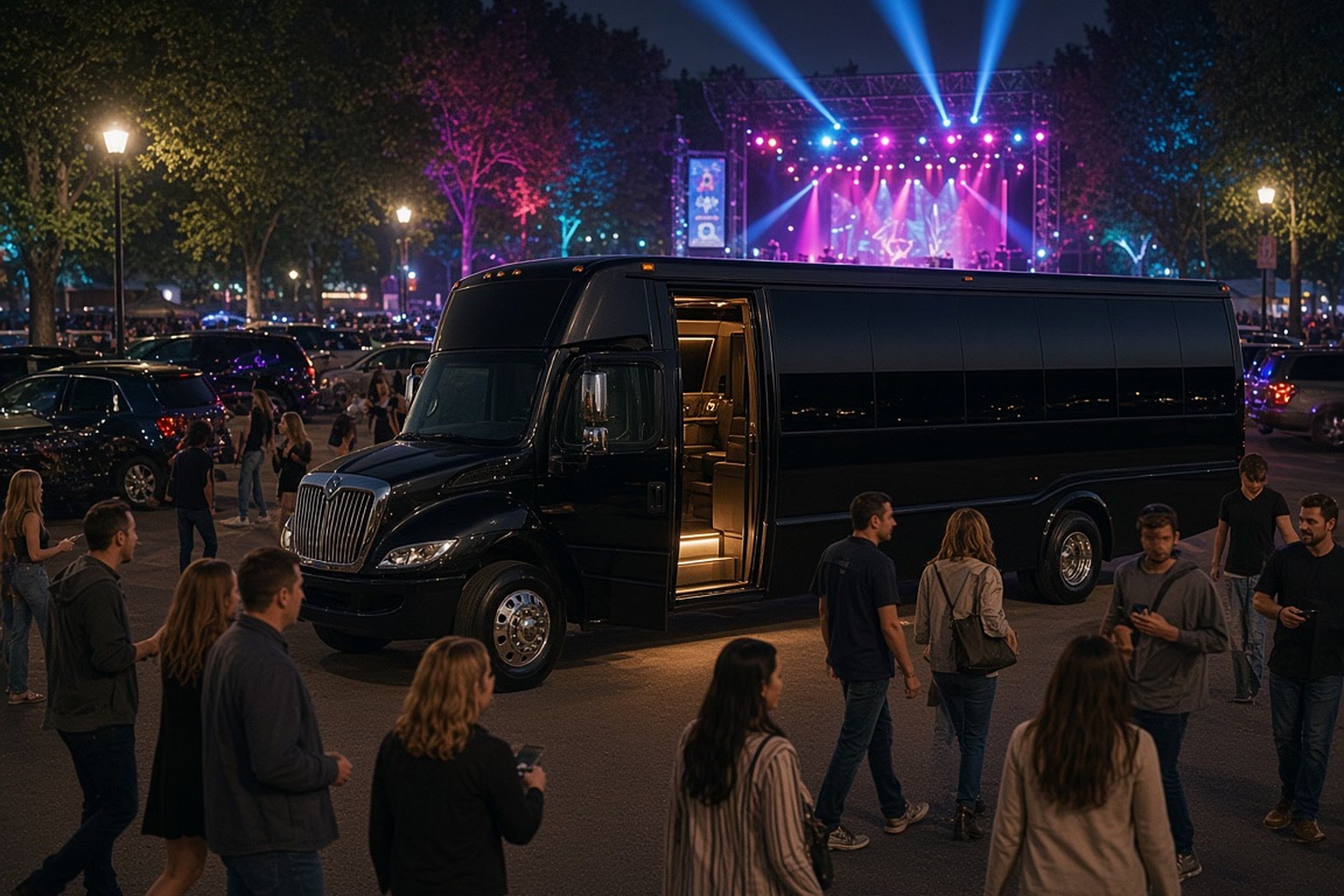
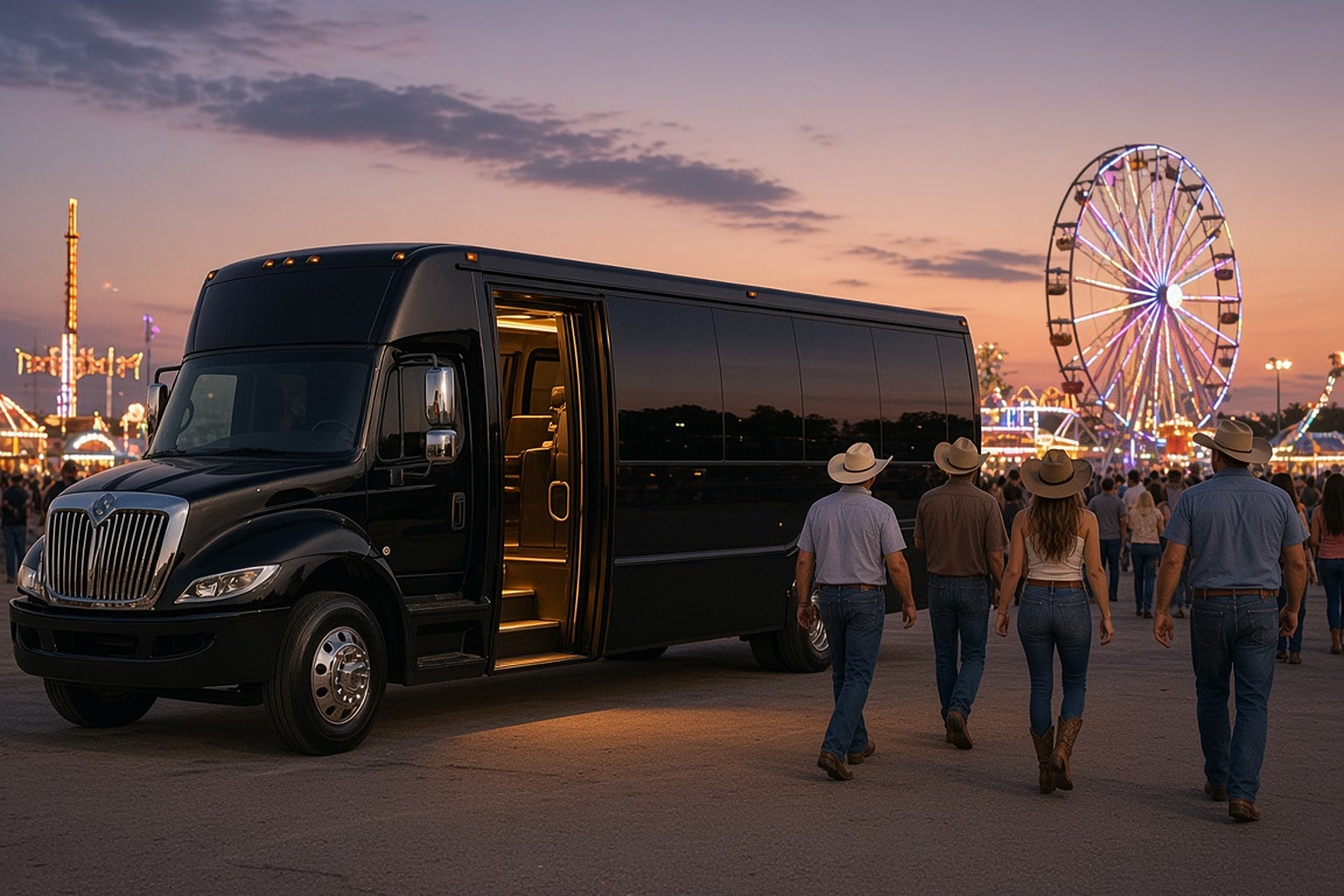
Two outings that merged groups love deserve their own note. For a Houston Rodeo night at NRG Park, officers on traffic duty decide where charter vehicles load, and your driver goes where they point, not where the plan says. Rodeo falls in March, so a Saturday date carries the spring six-hour minimum regardless. For concert transportation to Toyota Center or The Cynthia Woods Mitchell Pavilion up in The Woodlands, settle on a meeting spot away from the main exits before the show starts — twenty-six people hunting for each other in a departing crowd is its own kind of evening.
Two last things: board at the street rather than under a hotel canopy, which will be too low, and send us the gate code if either pickup sits inside a gated neighborhood.
Holding a date two hosts agree on
Weekend nights start at four hours. Sunday through Thursday, plus some daytime slots, can come down to three, and every Saturday in March, April, and May starts at six. About 53% of inquiries with a stated duration ask for three to four hours — but a two-pickup night like the one above almost always wants five or more.
Nothing is held until the paperwork is signed and half the total is in. There simply aren't as many buses in the mid-twenties as there are 18s and 20s, so the moment both hosts settle on a date, take it. Our quote checklist covers what to send us so the first number you get is the accurate one.
Want a number for your date?
Send the date, headcount, pickup area, and hours. The quote you get back already includes the driver, fuel, tax, and gratuity.