The short version
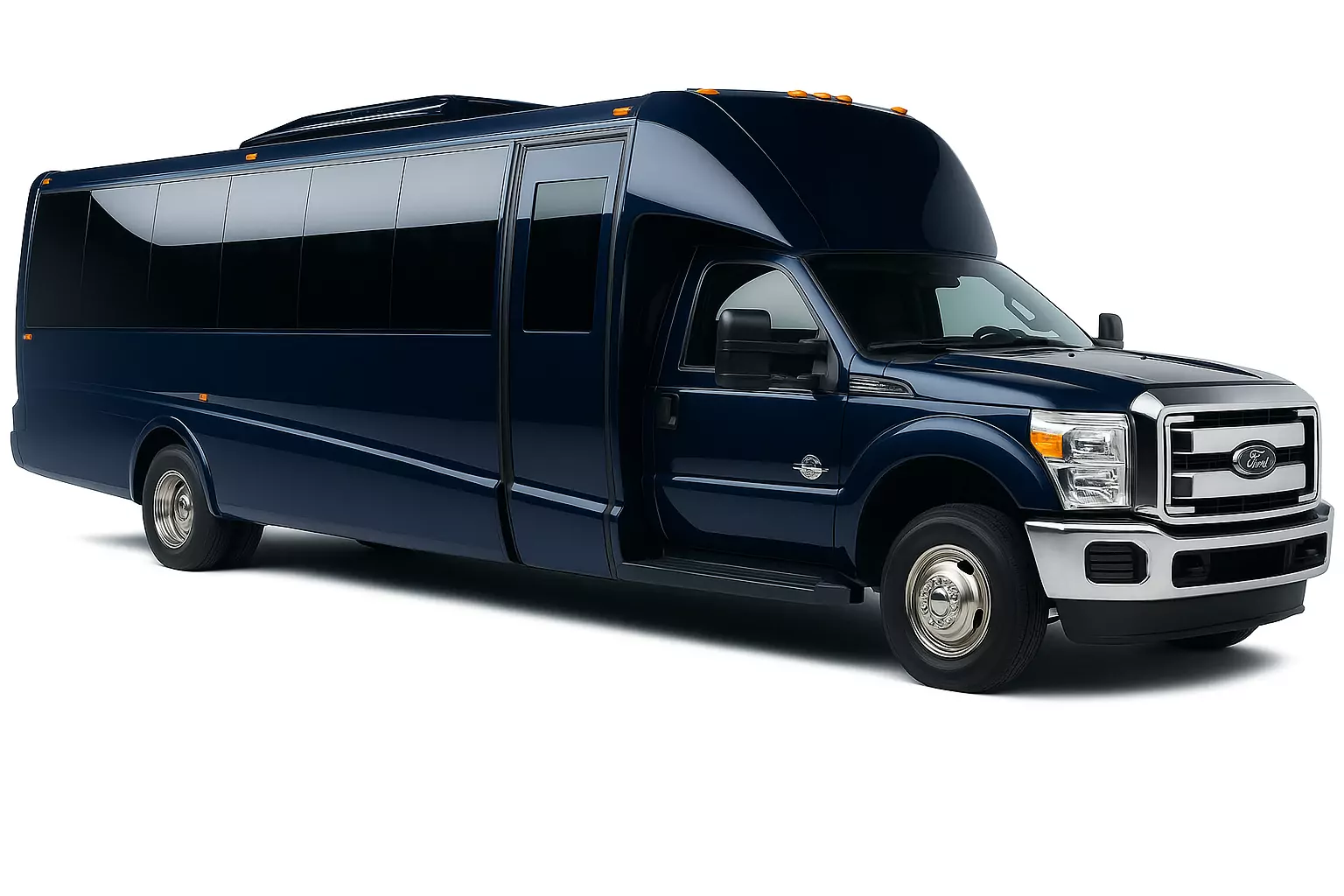
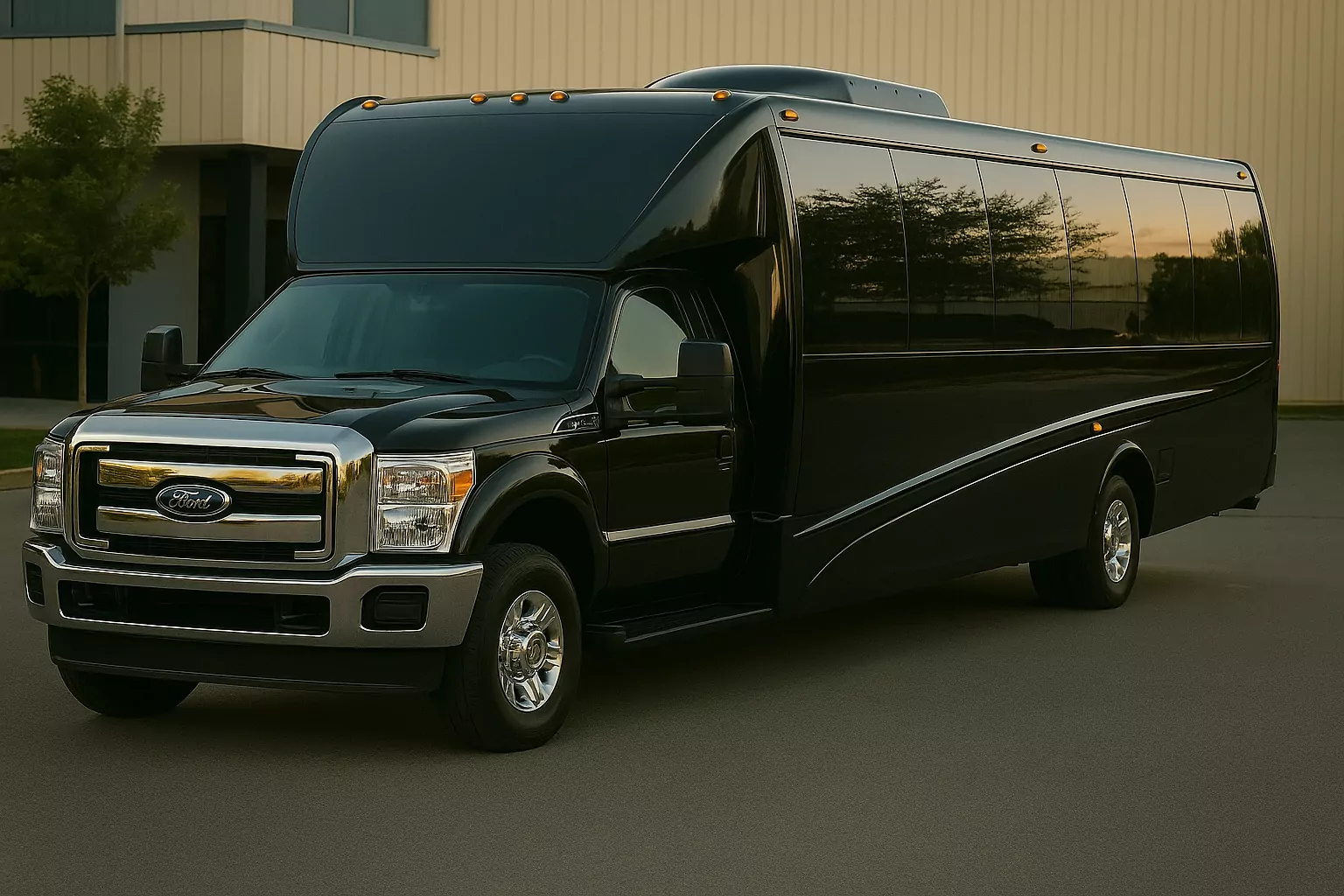
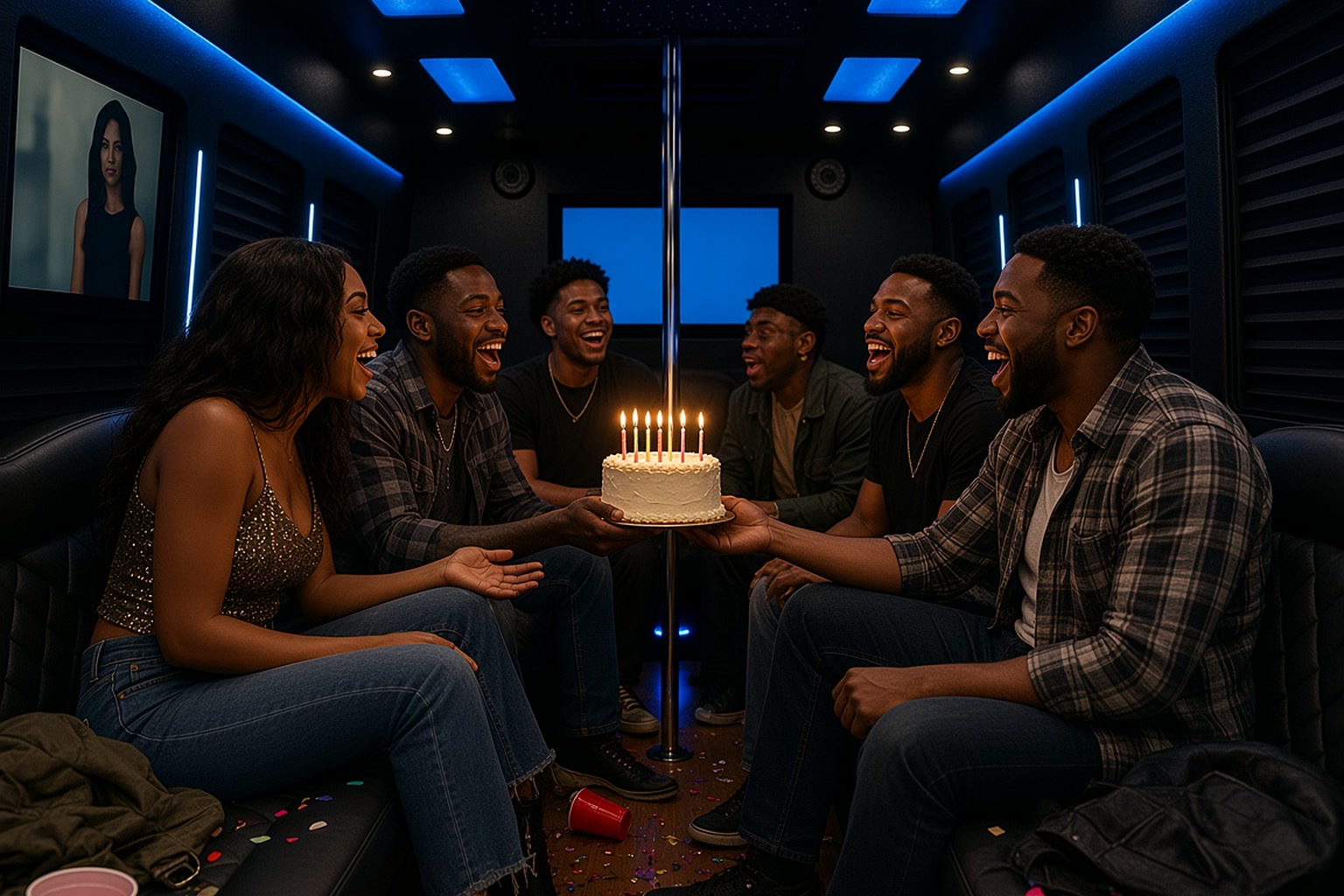
The 30 passenger party bus carries 26 to 30 riders in one vehicle, with wraparound leather seating, blue LED lighting, a wood-look standing floor, flat-screen TVs, Bluetooth sound, a bar area, and tinted windows. For most Houston groups this size it beats splitting across two limousines or Sprinters, because everyone arrives together and there is one driver, one route, and one quote.
A table for thirty in Midtown, 7:30 on a Saturday, and fourteen of the chairs still empty because the second car caught every red light on Westheimer. That's the evening this page is trying to save you from. Past about twenty-five people, splitting up starts to look sensible: two 14-passenger limousines, a limo plus a 12-passenger limo Sprinter, or a convoy of rideshares.
Occasionally the split is right. Far more often, for a group of 26 to 30, one bus does the same job with a lot less that can go wrong. The case runs both ways below.
What happens to a night that splits
Two vehicles sound like the same evening with more seats in it. What you get is two evenings running alongside each other.
- Arrivals drift. One car catches the light on Westheimer and the other doesn't. Half of you stand outside the restaurant for fifteen minutes while a table for thirty sits half empty.
- The party happens somewhere else. The best story of the night gets told in the car you weren't in — and groups that ride apart tend to stay apart at every stop after that.
- Two minimums, two contracts. Each vehicle is quoted on its own hours and carries its own weekend minimum. You're now coordinating two pickups, two drivers, and two sets of timings.
- Leaving gets awkward. One car's ready to go and the other isn't. Somebody waits, or somebody gets left.
- Nobody knows who's where. People swap cars between stops, and at 12:30 AM no one can say with confidence which vehicle anyone is in.
A single bus deletes every one of those. Thirty people get on at one curb and off at the next, and the driver has one route and one set of instructions.
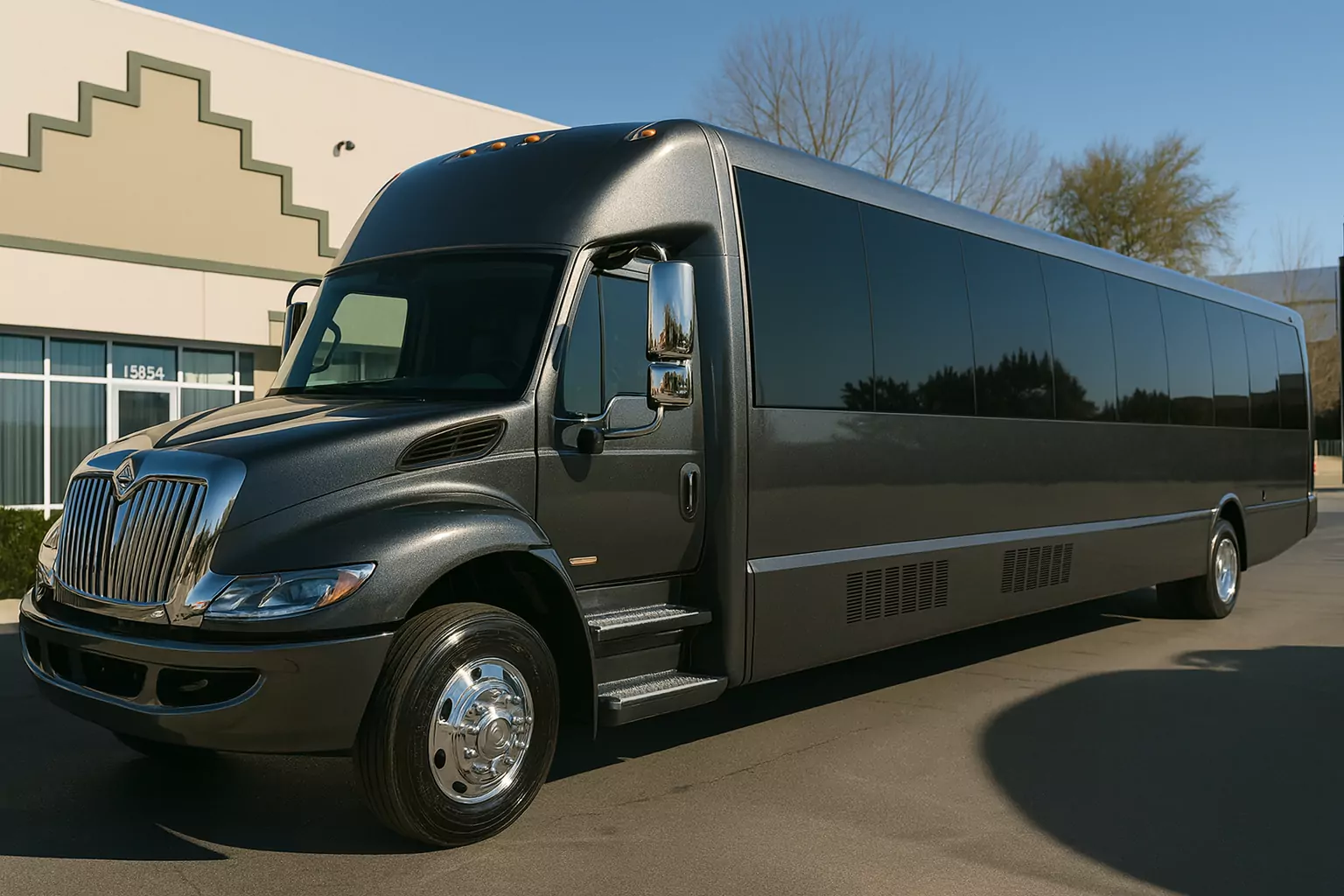
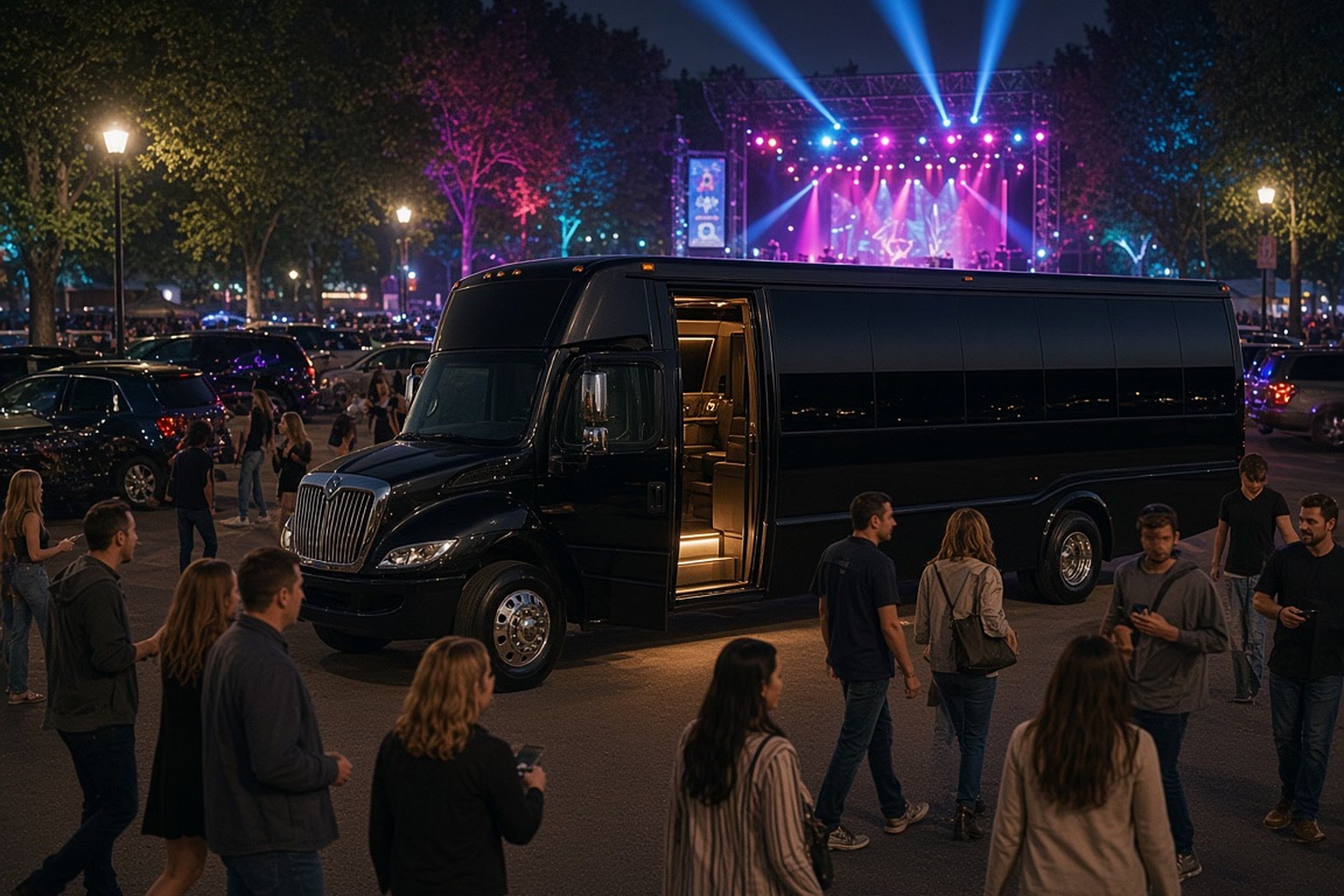
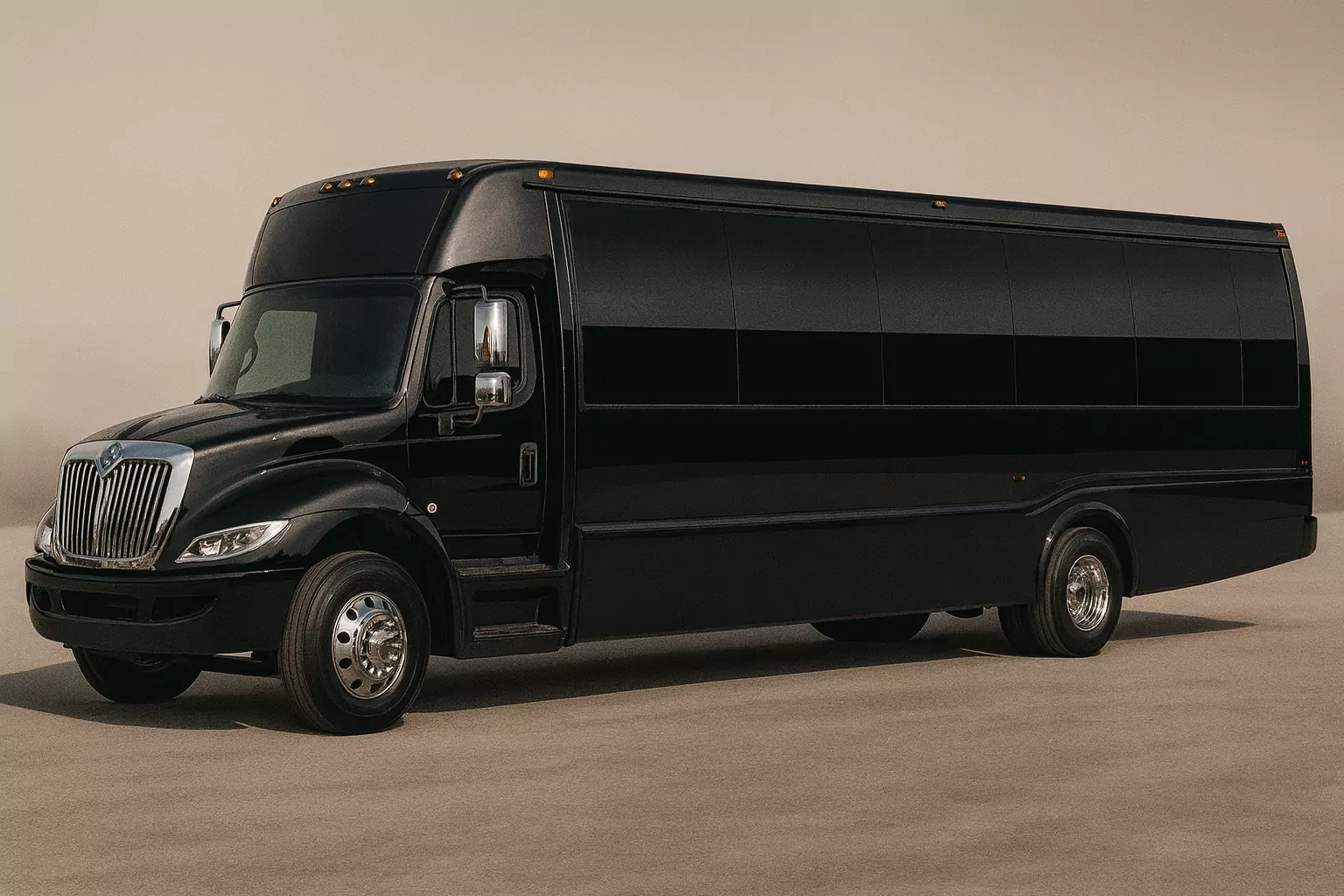 A full-size bus - this is where the larger half of the lineup starts.
When two vehicles are the better answer
We'd much rather you booked the right thing than the bigger thing. Two vehicles win in a handful of real situations:
- Pickups at opposite ends of the region. Half the group in The Woodlands and half in League City means one bus spends well over an hour driving each way. Two vehicles meeting at the first stop can be faster.
- Different finishing times. Ten people leaving after dinner and twenty staying out until 1:00 AM is a case for a smaller vehicle plus a bus, rather than one bus babysitting the whole span.
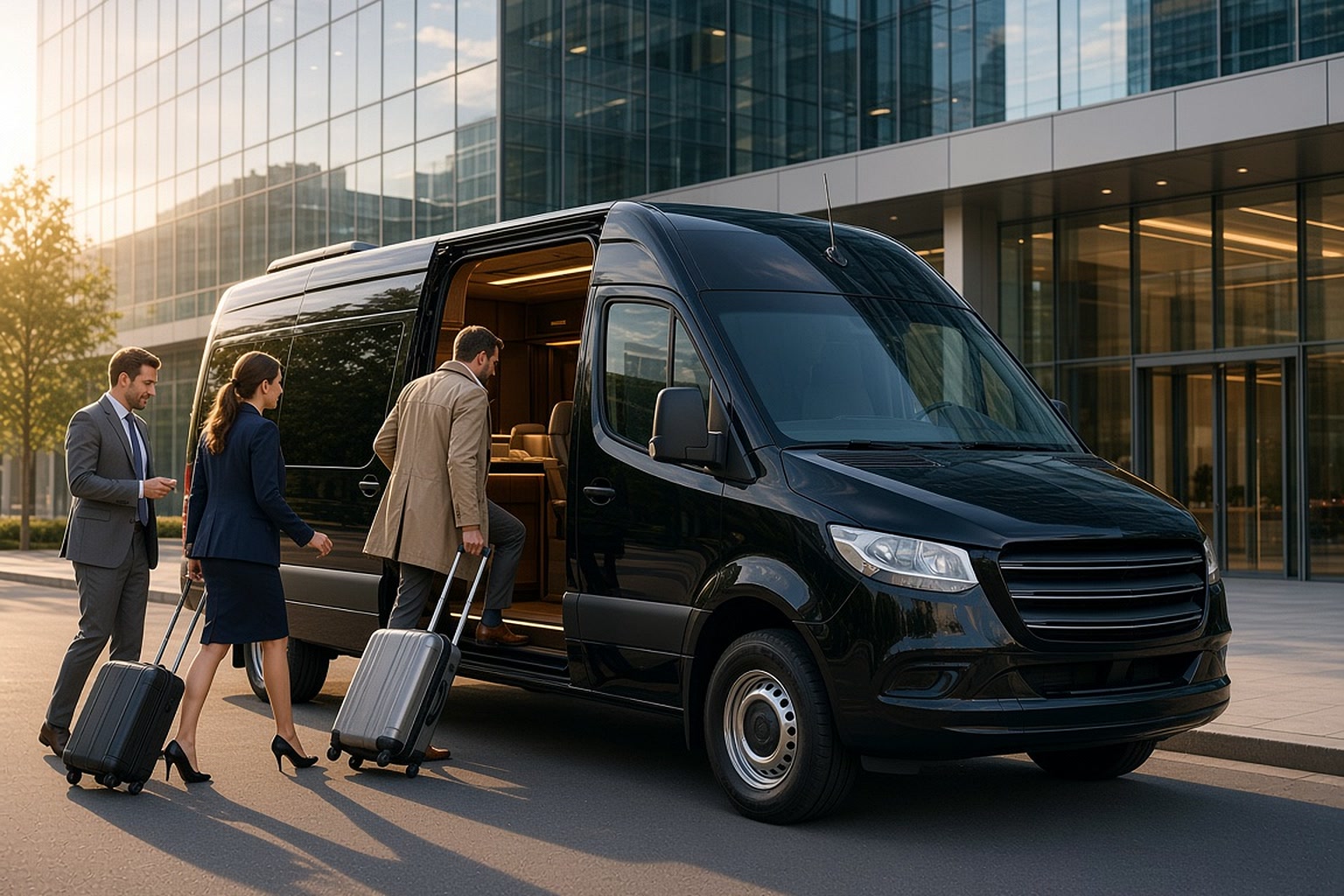
- Two different kinds of evening. Grandparents at a milestone birthday who'd prefer forward-facing seats and a quiet ride are often happier in a shuttle. The same is true of some corporate events, where the client group and the staff group want distinctly different nights.
- Venues that can't take thirty in one go. Some small bars simply can't seat or admit a group that size at once, and staggering arrivals is easier with two vehicles.
If none of that describes your night, one bus is the simpler life. The vehicle comparison tool lines the options up against your trip, and our party bus versus limo guide covers how differently the two ride.
What the record says about groups this size
We can't hand you a price comparison — every trip is quoted on its own details, and no vehicle has a public rate card. What we can do is show you what groups your size have done before.
Roughly one inquiry in eight, about 13% of those in our Houston inquiry data that gave a headcount, came from a group of 21 to 30. That's the band where one larger bus most often beats splitting up, on cost and on keeping everyone in the same room. And about 72% of inquiries with a quoted vehicle mentioned a party bus, which suggests most Houston groups talk themselves into the same answer.
Quote history leans the same way. Around 15% of party bus quotes on record came in between $1,500 and $1,999 — a band made up of large buses, long nights, and peak Saturdays, which is precisely what a 30 on a busy Saturday is. Historical quotes, not current prices. Divide a past $1,800 total thirty ways and it's $60 a rider, with driver, fuel, taxes, and gratuity already counted in. Two vehicles means two quotes, each carrying its own minimum, so compare the combined total rather than one of them.
And if the real competition is everyone ordering their own rideshares, the calculator below runs that comparison on your route.
Free planning tool
Rideshare vs. Party Bus
Compare the real cost and hassle of several rideshares against one vehicle for the whole group.
Run the comparison →The cabin that keeps thirty people in one conversation
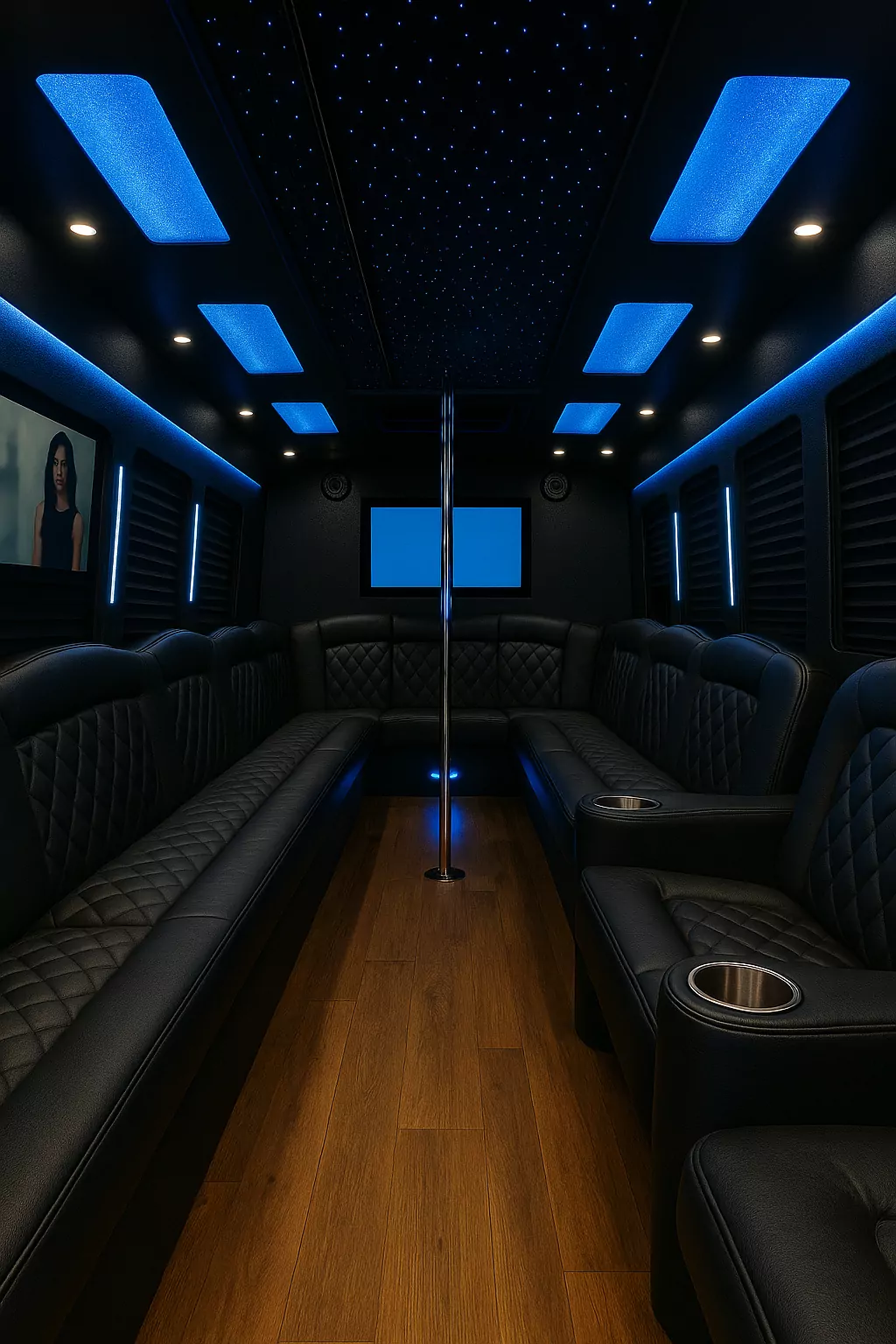
Listed for this bus: wraparound leather seating, blue LED lighting, a wood-look standing floor, flat-screen TVs, a Bluetooth sound system, a bar area, and tinted windows, with a professional driver at the wheel. The bus held for your date may differ in the details, and the written quote is where its equipment is confirmed.
Wraparound seating is the practical cure for the split-group problem. The benches follow the walls, so thirty people face into the same room instead of the backs of seats, and a conversation at one end can wander down to the other. Nobody's in the other car, because there isn't one.
The wood-look floor down the middle is where people stand and talk at stops and on slow city blocks. Coolers and bags belong tucked against the benches so it stays clear — thirty people boarding at once need that aisle. Ice and bottled water go into the bar area before we leave for your pickup. Bring drinks in cans or plastic, and at this headcount two medium coolers spread along the benches beat one enormous one parked by the bar.
Music plays from one phone over Bluetooth, so pick your person and have them download the playlist. The tinted windows keep things private at a downtown red light.
The open floor runs the length of the cabin, between the benches.
A thirty-person crawl, stop by stop
Bar crawls are where one bus really pays off, because every stop is another chance for a split group to mislay someone. This Saturday plan works off a downtown hotel.
| Time | Stop | Notes |
|---|---|---|
| 7:00 PM | Pickup on the street beside a downtown hotel | Everyone at the curb, not in the lobby |
| 7:15 | Dinner in Midtown | Table for 30, booked weeks ahead |
| 9:00 | Bars along Bagby Street | Two venues within walking distance |
| 10:30 | Washington Avenue | Driver drops on the avenue itself |
| 12:00 AM | Main Street downtown | Short last stop near the hotel |
| 12:45 | Drop-off at the hotel | Five hours 45 minutes, so book six |
Six hours for four real stops. It sounds generous until you count the boarding. Emptying a bus of thirty runs ten to fifteen minutes, and filling it again takes as long, every single time. About 34% of inquiries naming a duration ask for five or six hours, which is what a night like this takes. Our bar crawl page has more route ideas.
Guys' night out polls: what would you do?
Quick questions, real tallies. Vote to see how other riders answered — one vote per poll, no sign-up.
Where a bus this big can stop
Being full-size changes where your driver can pull in. Streets with room to pull over — Washington Avenue, Main Street downtown, the Midtown blocks around Bagby — are fine for a quick drop. Narrow residential streets in the Heights and Montrose generally aren't, and the bus will wait somewhere wider a short walk away.
Hotel porte-cochères are too low, so you'll board at the street. On a game night at Toyota Center or Daikin Park, the officers working traffic decide where large vehicles stop, and that overrules whatever was planned. In the suburbs, a cul-de-sac ringed with parked cars usually isn't turnable in a 30, so expect to walk to the end of the street. Behind a gate, send us the code or have the guardhouse expecting a bus.
Reserving above twenty-six seats
Party buses get scarcer the bigger they get, and there are far fewer above 30 seats than there are 18s, 20s, and 22s. If your date is a Saturday in October, December, or spring, book it the moment it's fixed.
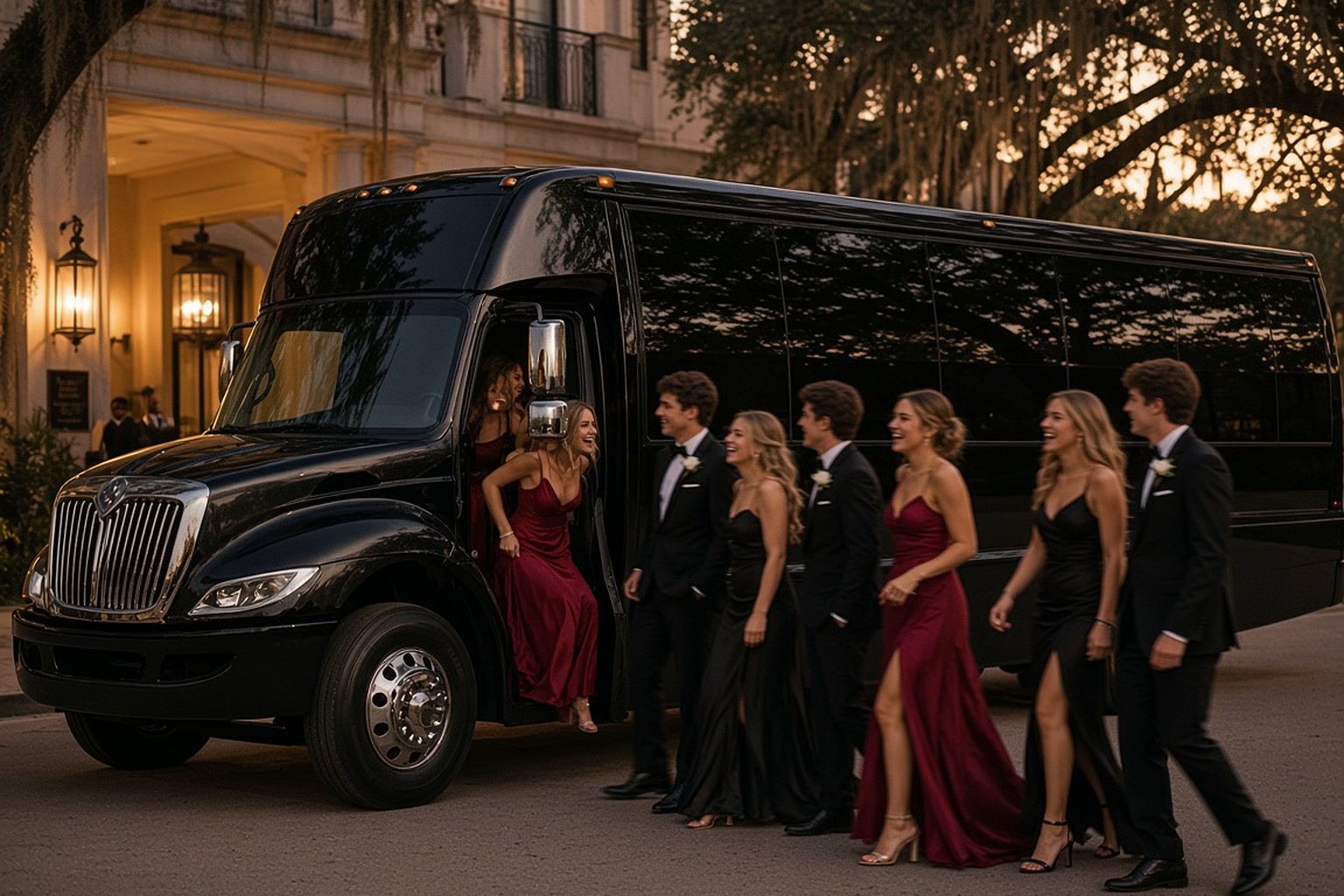
Weekend nights start at four hours; Sunday through Thursday, plus some daytime bookings, can be booked for three. Prom season overrides that, with every Saturday in March, April, and May requiring six — which covers prom nights nicely. For New Year's Eve, every large group in the city wants the same date, so ask early. The bus is yours once a contract is signed and half is paid, with the rest settled a week or two out. A quote by itself reserves nothing. How early to book covers which months fill first.
Anyone 21 and over can bring their own drinks. Glass, food, glitter, and confetti all stay off the bus. With a rider under 21 aboard, there's no alcohol unless a parent or legal guardian is riding too.
Want a number for your date?
Send the date, headcount, pickup area, and hours. The quote you get back already includes the driver, fuel, tax, and gratuity.
If thirty is more than you need, the 26-passenger party bus is the step down. If the list won't stop growing, the 36-passenger party bus is the step up.