The short version
It starts with confirmed riders, adds half your maybes, then makes room for standing, formalwear, and coolers or bags. What comes back is the passenger rating to shop for and a short list of vehicles that meet it. Capacity ratings are firm, so size for the crowd you can name and keep a seat or two spare.
"We've got sixteen, so a sixteen-seater is fine, right?" Not usually, and that's the single most expensive assumption in this whole business.
A passenger rating is a legal maximum, not a comfortable number. A bus rated for 22 carries 22 people sitting down — and the moment those 22 also want to stand up, dance, put a cooler somewhere and keep a gown off the floor, it feels a good deal smaller than the figure on the page. The planner above works backwards from how your group will really ride and hands you a number to shop with.
Rated capacity and comfortable capacity aren't the same thing
Every vehicle we run has a firm capacity rating, and no driver can take a single rider over it. That's a safety and licensing matter rather than a preference, so a group turning up with 23 people for a 22-passenger bus is leaving somebody at the curb. There's no negotiating it at 9 PM.
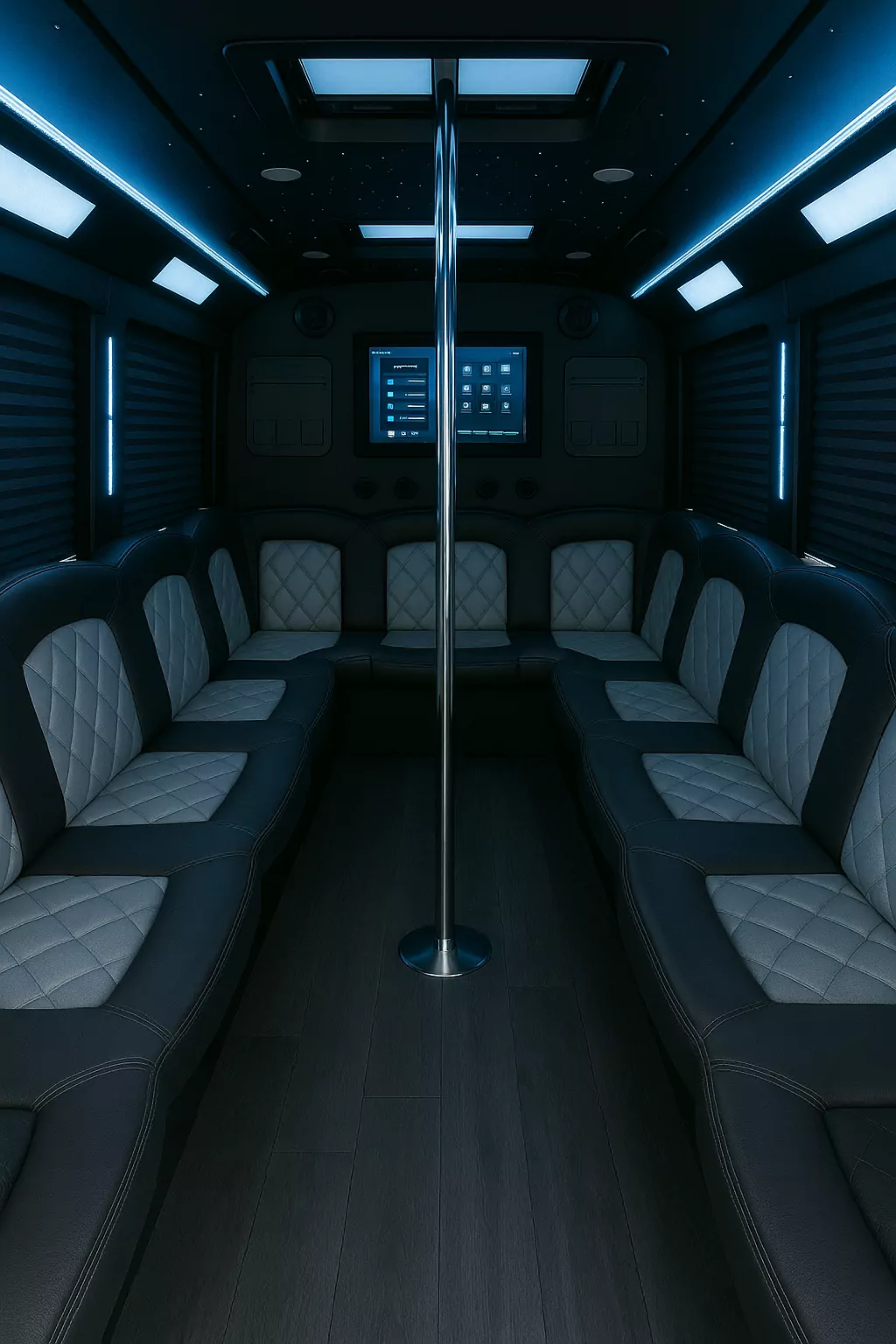
Inside that rating, comfort turns on three things the rating knows nothing about: whether people stand, what they're wearing, and what they're carrying. A full-length dress takes more bench than jeans do. Two coolers and a heap of bags eat a seat or so of floor. And on a party bus, a group filling every single seat has nowhere left to move, which was the reason they wanted a bus in the first place. So the planner builds space for each of those in deliberately.
The five inputs, and what each one moves
Confirmed riders
People who've said yes, and ideally paid. Everything else stacks on this figure, so it's worth resisting the pull of the group chat when you fill it in.
Maybes
People who haven't committed. The planner counts half of them, rounded up — a planning assumption rather than a law, and a deliberately middle-of-the-road one, since some groups lose every maybe and some gain the lot. You'll also see a second figure for the everyone-turns-up case, so the ceiling isn't hidden from you.
How you want to ride
Three choices, each aimed at a different part of the fleet.
- Stand and mingle points at party buses and adds about 10% more space so people can move.
- Seated and formal puts limousines first and party buses second, for dressed-up trips where everyone sits facing in.
- Forward-facing with luggage sends you to Sprinters, shuttles and coaches — airport runs, day trips, guest shuttles.
Formalwear
Worth switching on for prom, weddings, quinceañeras and galas. It adds roughly another 10% for gowns, suit jackets, and the careful way people sit when they're wearing them.
Coolers or bags
This adds two seats' worth of space for coolers and bags on a party bus or limousine, or for carry-ons that won't go underneath on a shuttle. Two seats is a modest allowance, so if your group is bringing three coolers and a week's luggage, round further yourself.
A Saturday quinceañera court, step by step
Made-up group, used purely to show how the arithmetic stacks up.
Fourteen members of a quinceañera court have confirmed, four more are maybes. They want to stand and move between the church and the reception, everyone's in formalwear, and two coolers of soft drinks are coming.
| Step | Added | Running total |
|---|---|---|
| Confirmed riders | 14 | 14 |
| Half of 4 maybes | 2 | 16 likely riders |
| Floor space for mingling | 2 | 18 |
| Formalwear | 2 | 20 |
| Coolers and bags | 2 | 22 |
The answer is a vehicle rated for 22 or more. If all four maybes materialise, 18 people ride, still comfortably inside 22, so no warning appears. The shortlist would open with the 22-passenger party bus and the 24-passenger party bus, with the 26-passenger party bus as the roomy option.
Look at what happened there. Sixteen likely riders, and the right shopping number is 22. A family booking an 18-passenger bus straight off the headcount would have been perfectly legal and thoroughly cramped, in photographs, in gowns. The quinceañera page covers the rest of that day, church to photo stop.
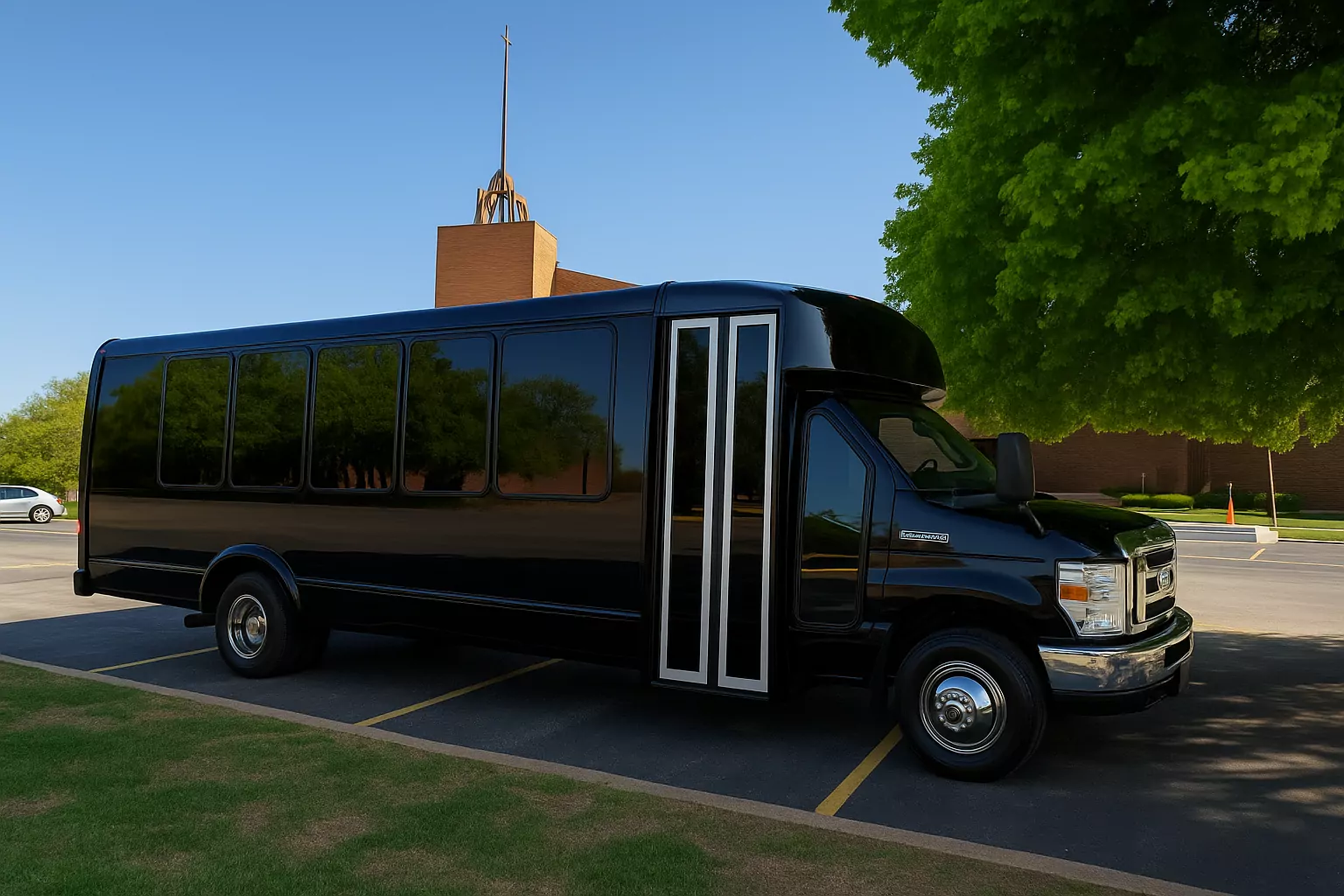
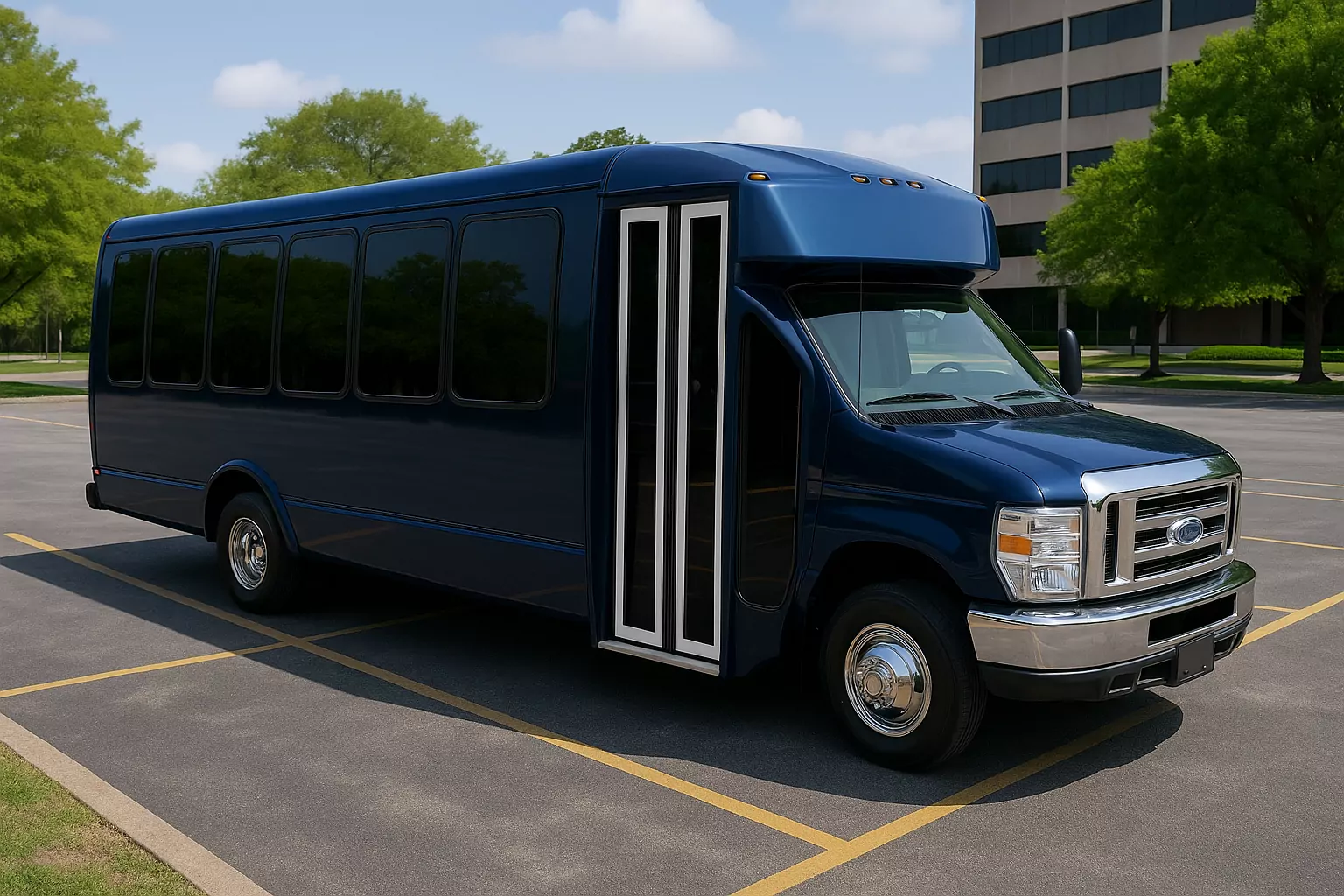 A 24-passenger bus, one of the sizes a formalwear group of sixteen to eighteen tends to shortlist.
Where your group sits in Houston
Under the results, you'll see where your number falls in our Houston inquiry data. About 49% of inquiries with a valid group size were for 11 to 20 passengers, and about 31% were for ten or fewer. Groups of 21 to 30 were about 13%, and 31 to 40 about 5%.
Those shares are useful for one blunt reason: the band most people land in is the band where vehicles run out first. If the planner puts you at 18 to 24 seats, you're shopping for the same handful of buses as nearly half of everyone else who calls us — which on a spring or holiday Saturday is the whole argument for settling your headcount early. Land above 30 and the problem inverts. There simply aren't many vehicles that big, so your choice is short on any date at all.
Narrow it to inquiries that mentioned a party bus and about 57% were for 11 to 20 passengers. The typical party bus group is a group of friends rather than a crowd, which is exactly why the 18- to 24-passenger buses do most of the work in this city.
When the answer comes back a limo, a Sprinter, or a coach
The shortlist changes shape with the ride style you picked, and each version is telling you something worth hearing.
A seated and formal result for ten or fewer usually opens with a 10-passenger limousine or the 12-passenger limo Sprinter. The Sprinter has stand-up headroom, which anyone in heels or a fitted suit notices within about four seconds. For an anniversary dinner or a small birthday party, it often beats a bus — you're not paying for floor space nobody's going to stand on.
A forward-facing result lands on vehicles like the 24-passenger shuttle bus, with belts at every seat and somewhere for bags. Right for a guest shuttle or a day trip. Wrong for a night of dancing between stops, and it'll feel wrong within one leg.
When nothing in a style carries your number, you'll be told rather than quietly shown the biggest thing available. Past that point, groups either ride in two vehicles traveling together or step up to something like the 56-passenger charter coach.
Party buses polls: what would you do?
Quick questions, real tallies. Vote to see how other riders answered — one vote per poll, no sign-up.
When the ceiling number is bigger than the recommendation
You'll get a warning. There are three honest responses to it, and one dishonest one.
- Push the maybes for an answer. Give them a date to say yes or no by, ideally before the 50% deposit falls due. Most maybe problems evaporate the moment somebody asks directly.
- Size for the ceiling. If the maybes look likely, book the rating that fits them all. A larger bus costs more than a smaller one, and far less than a second vehicle found in a panic.
- Set a hard cap. Plenty of groups decide that whoever pays first gets the seats. Perfectly fair, as long as it's said out loud early.
The dishonest one is hoping. Moving up a size after you've signed is frequently impossible on a weekend, because the bus you now want has belonged to somebody else since March.
The mistakes that come up most
- Counting the driver's seat, or a lap. Neither is a seat. Everyone needs a rated one, including small children.
- Forgetting the photographer. A wedding or quinceañera photographer riding along is a passenger like anyone else.
- Assuming a stretch limo holds its rating in gowns. Filled to its number with full skirts, a limo is tight. Turn the formalwear toggle on and watch what moves.
- Booking for the invite list. Invited isn't coming. Enter the confirmed riders and let the maybe rule do its job.
- Ignoring the cooler. Coolers live on the floor or on a bench, and on a small vehicle two of them quietly cost you a seat's worth of room.
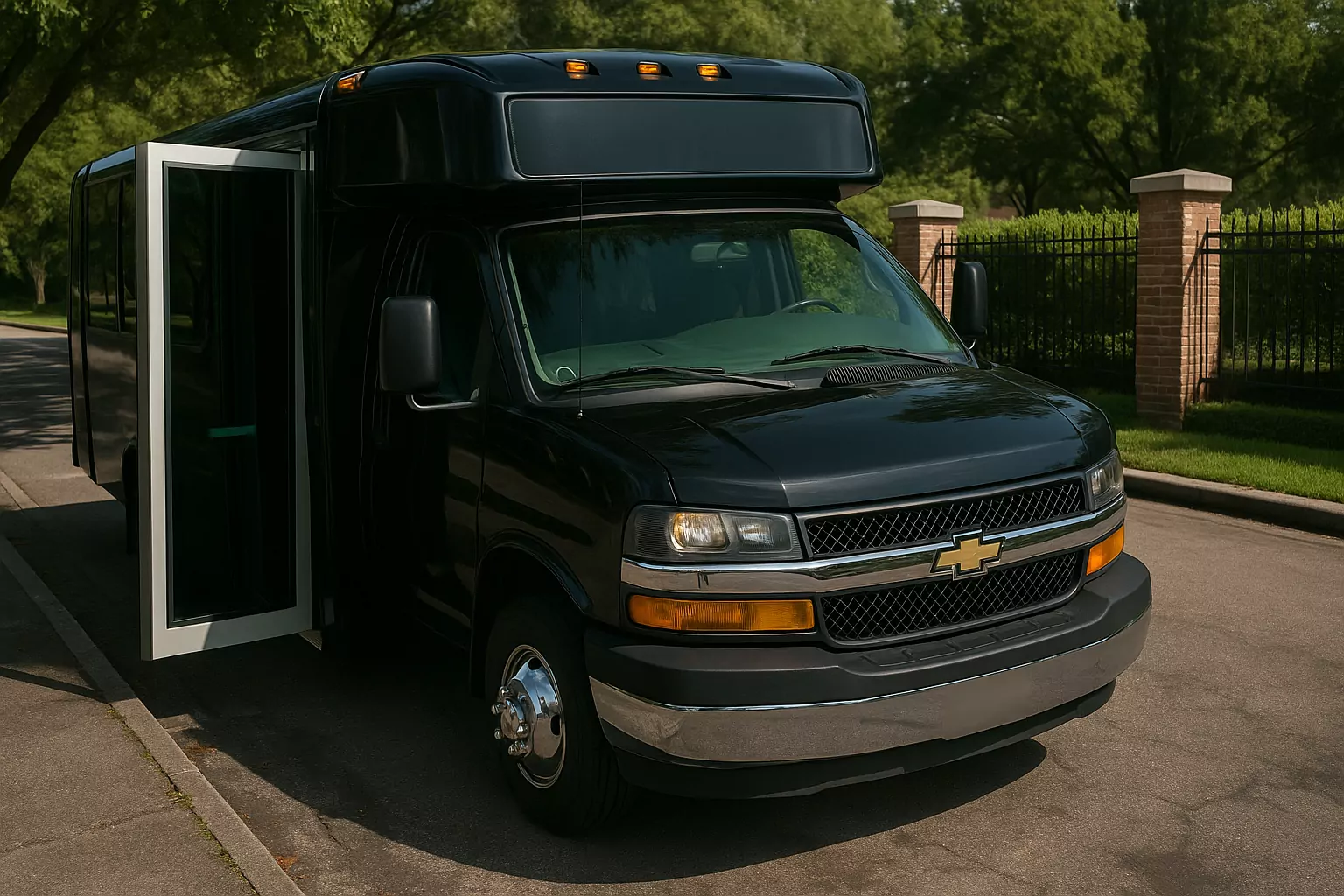
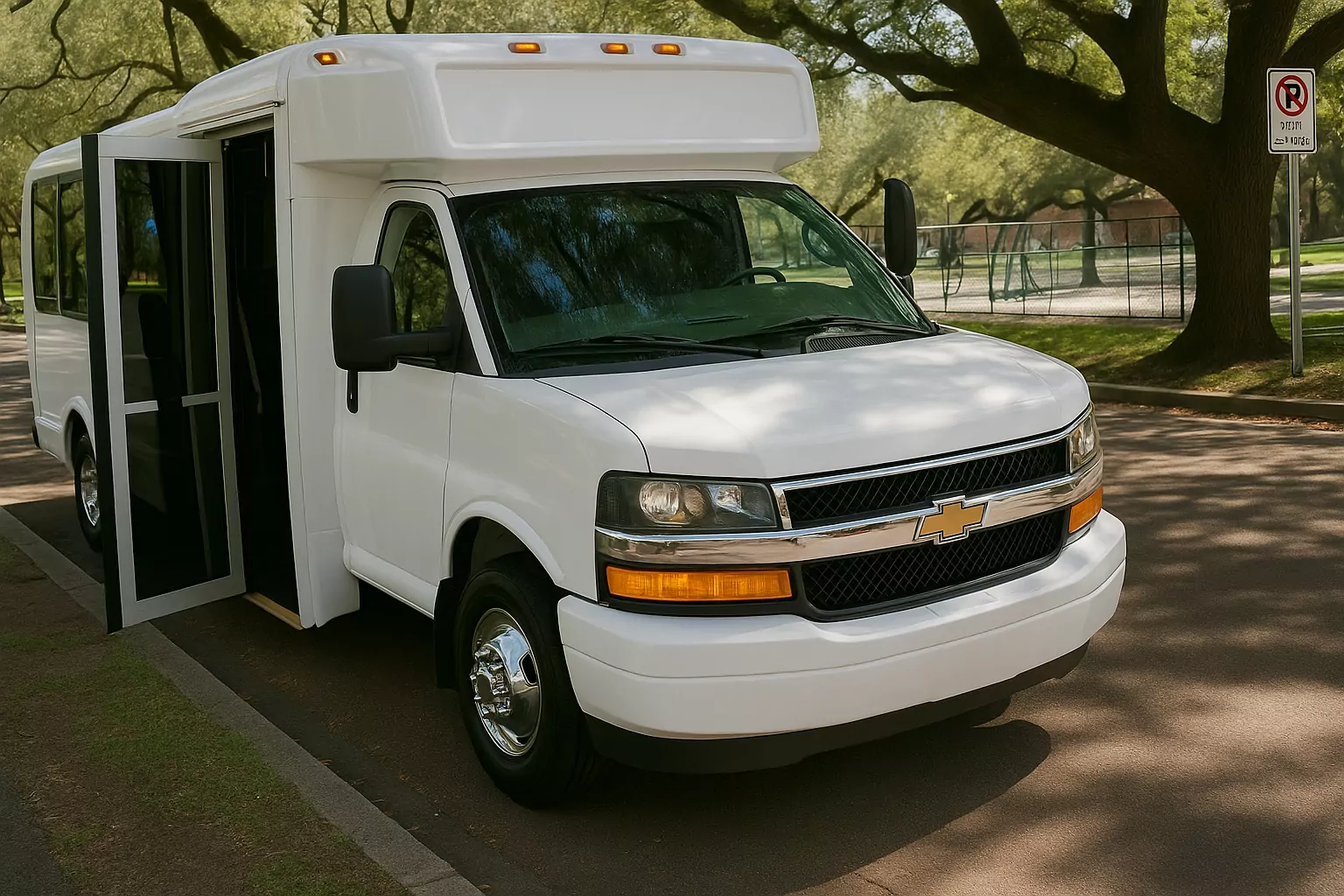 An 18-passenger bus suits a group of fourteen or fifteen who want room to move.
From a number to a booking
Once you've got a rating and a shortlist, the next question is which of those vehicles suits your particular night — and that's not only about seat count. Headroom, a bar, standing room, how gracefully people get in and out in formalwear, and what's worth asking about when you get a quote all vary between vehicles. The vehicle compare tool sets two or three side by side so you see the differences before you start collecting quotes.
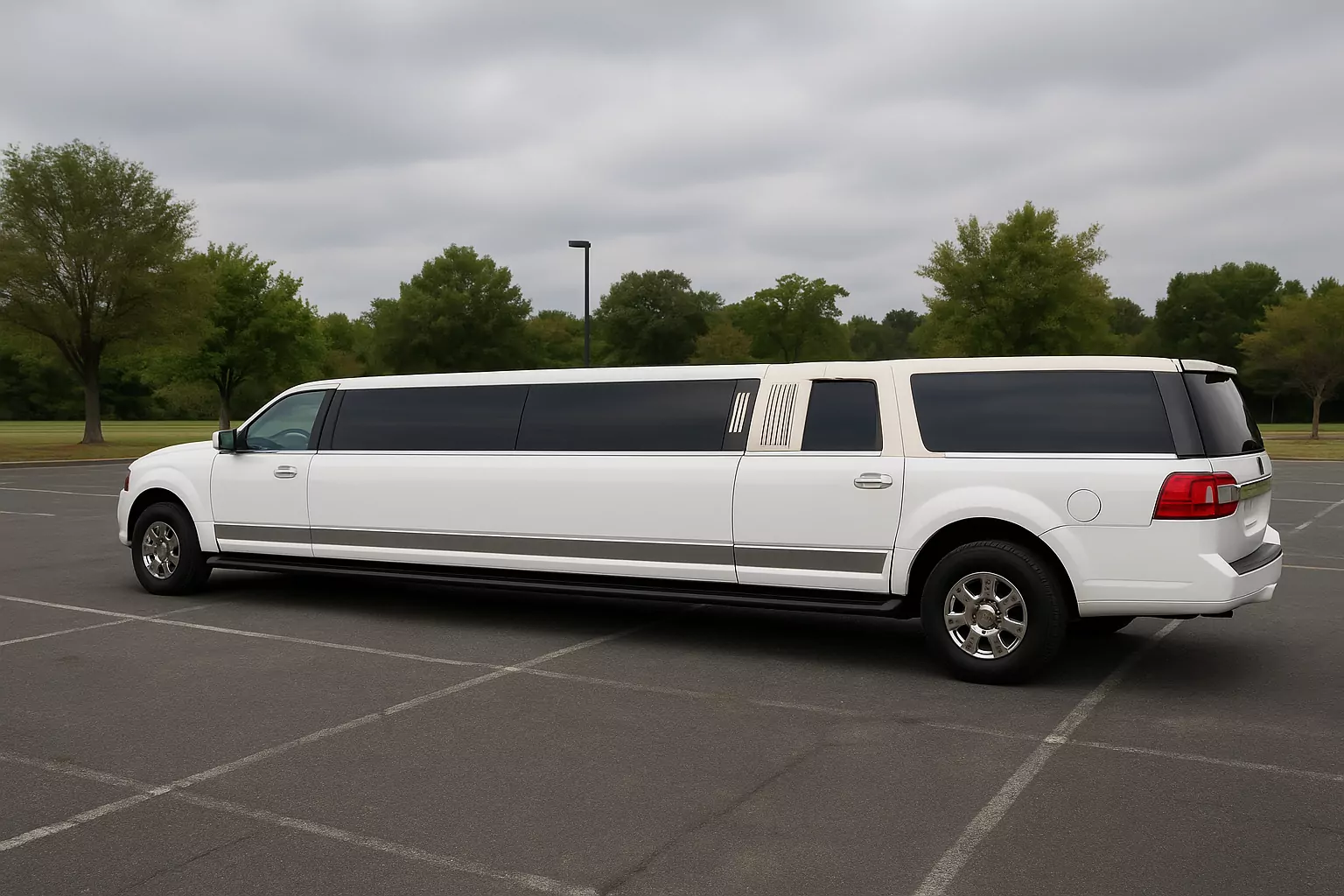
Free planning tool
Vehicle Compare
Party bus, limousine, Sprinter, shuttle, or coach: compare them side by side for your trip.
Compare vehicles →Then send the rating, the date, the pickup area and a rough plan through the quote form, or call or text (281) 549-2511 between 8 AM and 8 PM. We'll tell you which of the shortlist is open on your date and quote the one that fits. Still weighing vehicle types? Our party bus vs limo guide goes deeper on the trade-offs.
Want a number for your date?
Send the date, headcount, pickup area, and hours. The quote you get back already includes the driver, fuel, tax, and gratuity.