The short version
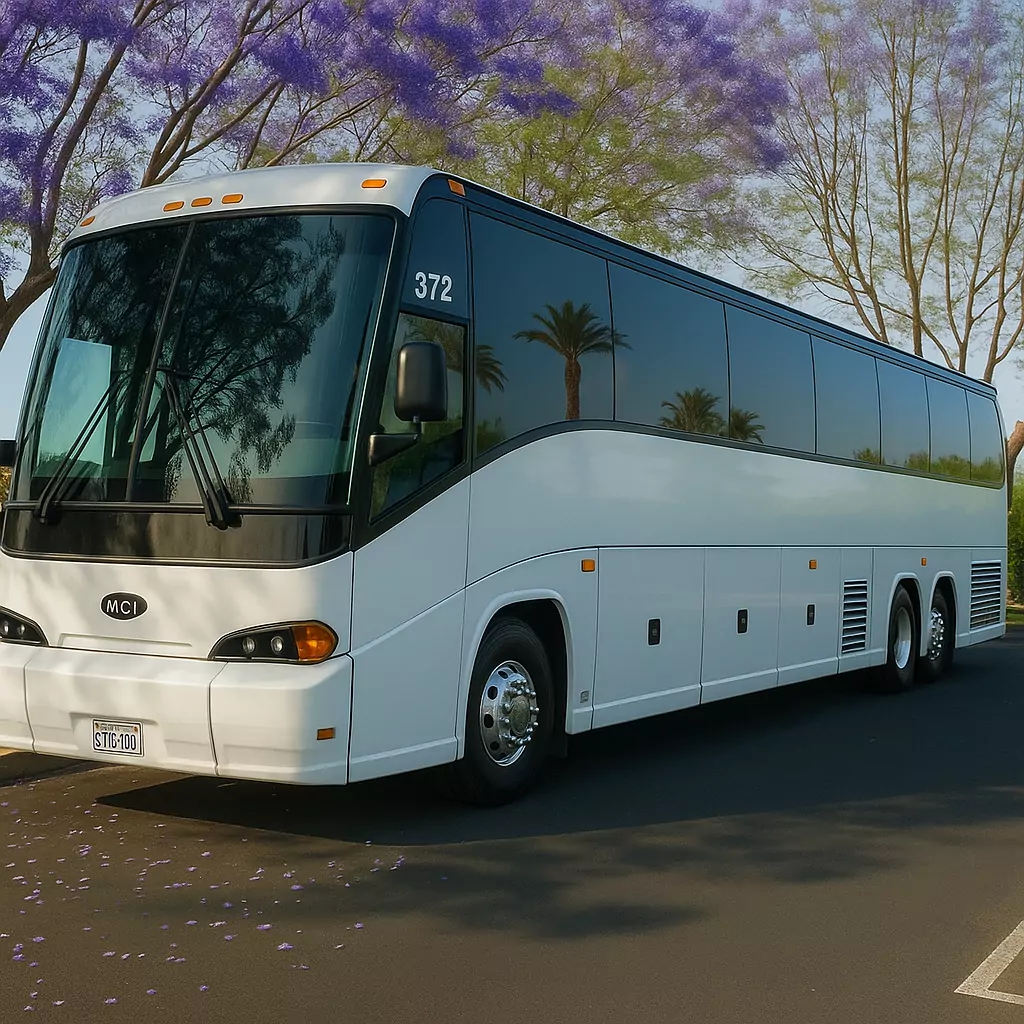
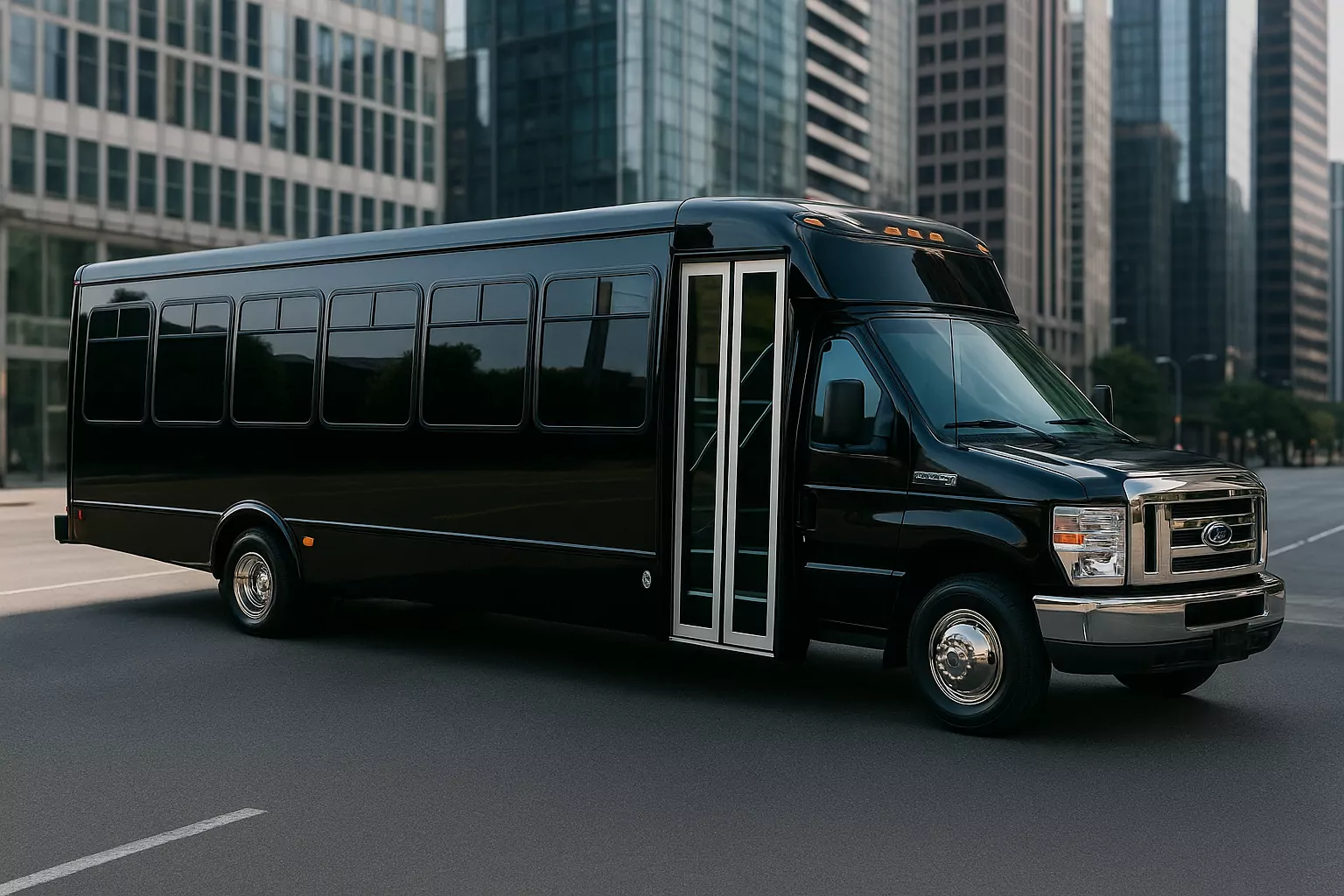
Sizing a Houston conference shuttle comes down to three numbers - riders in your busiest hour, the round-trip time between hotel and venue, and seats per vehicle. Most hotel-to-George R. Brown runs end up on 24-passenger shuttles or 44- to 56-passenger coaches. Vehicles book by the hour on a 50% deposit, and airport groups want coaches with luggage bays.
Your whole transportation plan gets judged at two moments. The first is 7:40 AM, when four hundred people decide simultaneously that they'd like to be at the opening session. The second is the afternoon of the last day, when those same people would all like to be at the airport. Everything between those two points takes care of itself.
So this page is about those two peaks — how to plan for them here, which vehicles we'd put on the job, and what Houston's main venues will actually let you do at the curb.
Worth saying up front: we supply vehicles and professional drivers by the hour. We aren't a destination management company, and we don't send staff with clipboards. For a meeting of a few hundred people that's usually all you need, as long as the plan behind it is sound.
The whole plan comes down to three numbers
Total registration tells you almost nothing. These three figures tell you everything.
- Riders in your busiest hour. Not the headcount — the number who have to move in the worst 60 minutes. Anyone staying at a hotel attached to the venue drops off this list, and so do most people with rental cars.
- Round-trip time. Hotel to venue and back, loading at both ends included, timed for the hour you'll really be running rather than a midday test drive.
- Seats per vehicle. Capacity ratings don't flex. A 56-seat coach moves 56 people.
From there it's one line of arithmetic. Sixty divided by your round-trip minutes gives you trips per vehicle per hour. Multiply that by seats, divide peak riders by the result, round up, and you have your fleet.
Say you have 120 people near the Galleria
Your registration survey shows 120 attendees in a Galleria hotel block, all of them wanting to be at the George R. Brown Convention Center for a 9:00 AM keynote. It's about nine miles. Morning traffic on US-59 makes that 35 to 45 minutes each way, and loading adds more, so the round trip is realistically 90 minutes.
| Vehicle | Seats | Trips each can make before 9:00 | Vehicles needed for 120 |
|---|---|---|---|
| 24-passenger shuttle bus | 24 | 1 | 5, which is more than anyone wants to manage |
| 44-passenger coach bus | 44 | 1 | 3, with the first departure at 7:15 |
| 56-passenger charter coach | 56 | 1 | 2 coaches plus a shuttle, or 3 |
What that table shows is that on a long run, nothing loops. Each vehicle gets one morning trip, which means seats for nearly everybody at the same time. Shorten the run to ten minutes downtown and it flips — one shuttle turns three times an hour and carries the whole block.
The planner below was built for wedding receptions, but the arithmetic is identical: guest count, drive time, and start time go in; loops and vehicle sizes come out. Treat the ceremony time as your keynote.
Free planning tool
Wedding Shuttle Planner
Guest count, hotel-to-venue drive time, and ceremony time in; shuttle loops and vehicle sizes out.
Plan the shuttle →The venues, and what each one does to your route
George R. Brown Convention Center. The GRB runs along Avenida de las Americas on the east edge of downtown, facing Discovery Green. The Hilton Americas-Houston and the Marriott Marquis are both connected by skybridge, so those attendees walk and never think about you. Your shuttles exist for the overflow blocks — elsewhere downtown, in Midtown, or out toward the Galleria. Visitor and access details live at grbhouston.com.
NRG Center. The exhibition hall at NRG Park draws the big trade shows, the Offshore Technology Conference every May among them. Almost nothing is within walking distance, so nearly every attendee is riding in from the Medical Center, the Galleria, or downtown. Bus access points shift event to event at NRG Park — we get into that on our Houston rodeo page, which covers the same complex.
Hotel ballrooms. A lot of corporate meetings never see a convention hall at all. They live in hotels around the Galleria, the Energy Corridor, or at the Waterway in The Woodlands, which has a convention center attached to the hotel. Here the transportation job usually shrinks to the airport and one off-site dinner.
The Texas Medical Center. Medical meetings bring a constraint nothing else does: narrow streets, ambulance traffic that never stops, and essentially nowhere for a coach to sit. Staging has to be worked out with the host institution in advance, and it's the first call we'd make.
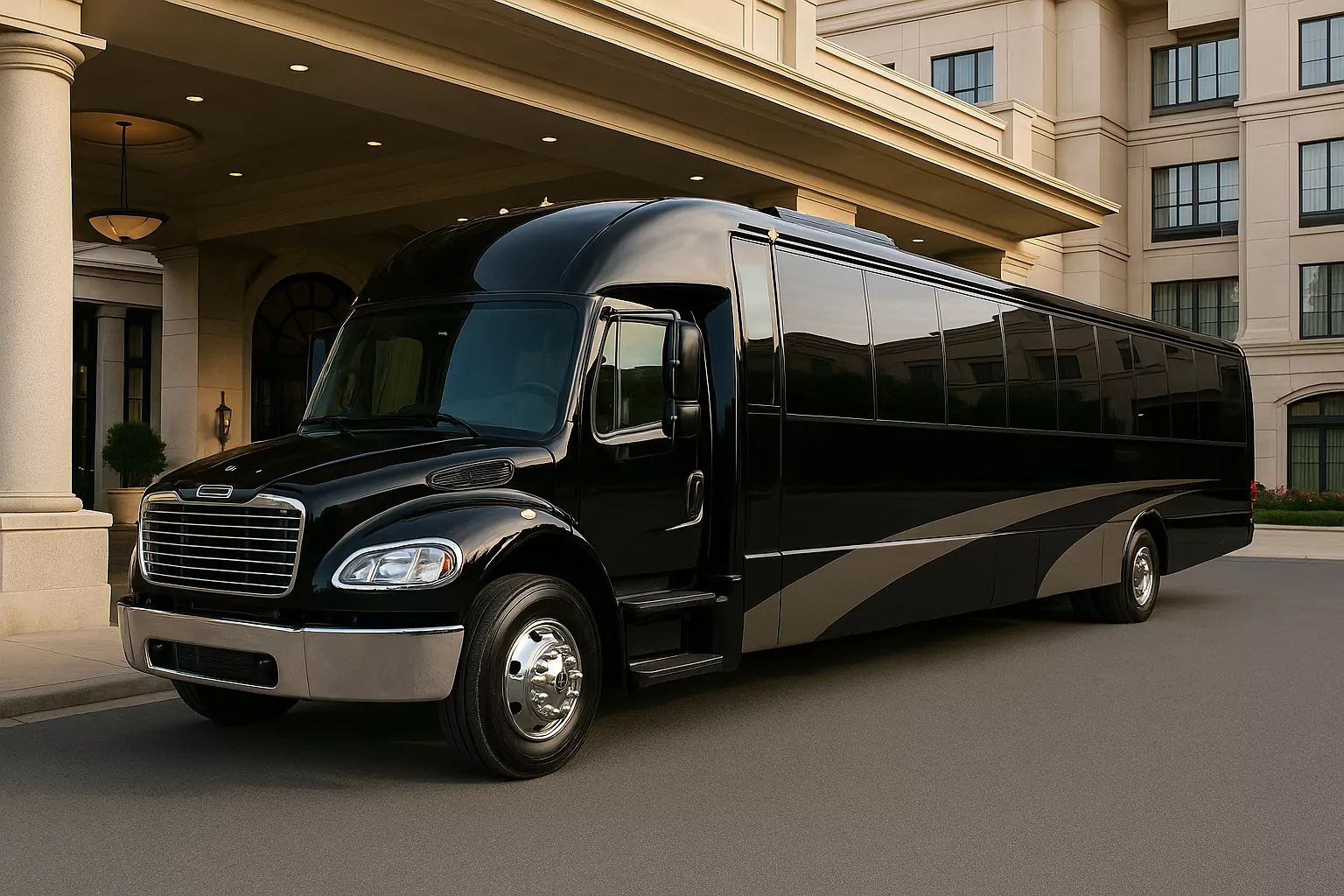 Confirm the porte-cochère height before you promise anyone a front-door pickup.
Which kind of shuttle are you actually asking for?
Most planners say "a shuttle" when they mean one of three quite different operations, and the difference matters more than the vehicle does.
- Continuous loop. Vehicles circulate all morning and people board whatever pulls up. Lovely on a short run, say a Midtown hotel to the GRB. On a long run, the gap between buses becomes the thing people complain about in the post-event survey.
- Fixed departures. Buses leave the hotel at 7:15, 7:45, and 8:15, and leave the venue at 5:15 and 6:00. This is the right answer for anything over twenty minutes each way, and it prints cleanly on a badge insert.
- Single transfer. Everyone moves once, together — hotel to the off-site reception, back at 10:00 PM. The simplest of the three to run well, and the hardest to get wrong.
Whichever shape you land on, the vehicles are booked as continuous hourly blocks. A morning run and an evening run on the same day are either one long block or two separate ones, and which comes out cheaper depends entirely on the gap between them. We're happy to quote it both ways so you can see the difference.
Conference shuttles polls: what would you do?
Quick questions, real tallies. Vote to see how other riders answered — one vote per poll, no sign-up.
Getting people in from IAH and Hobby
Bush Intercontinental is about 22 miles north of downtown and Hobby roughly 11 miles southeast. Light traffic makes that 30 minutes and 20 minutes respectively. Land at 5:00 PM on a weekday and you can nearly double the IAH number.
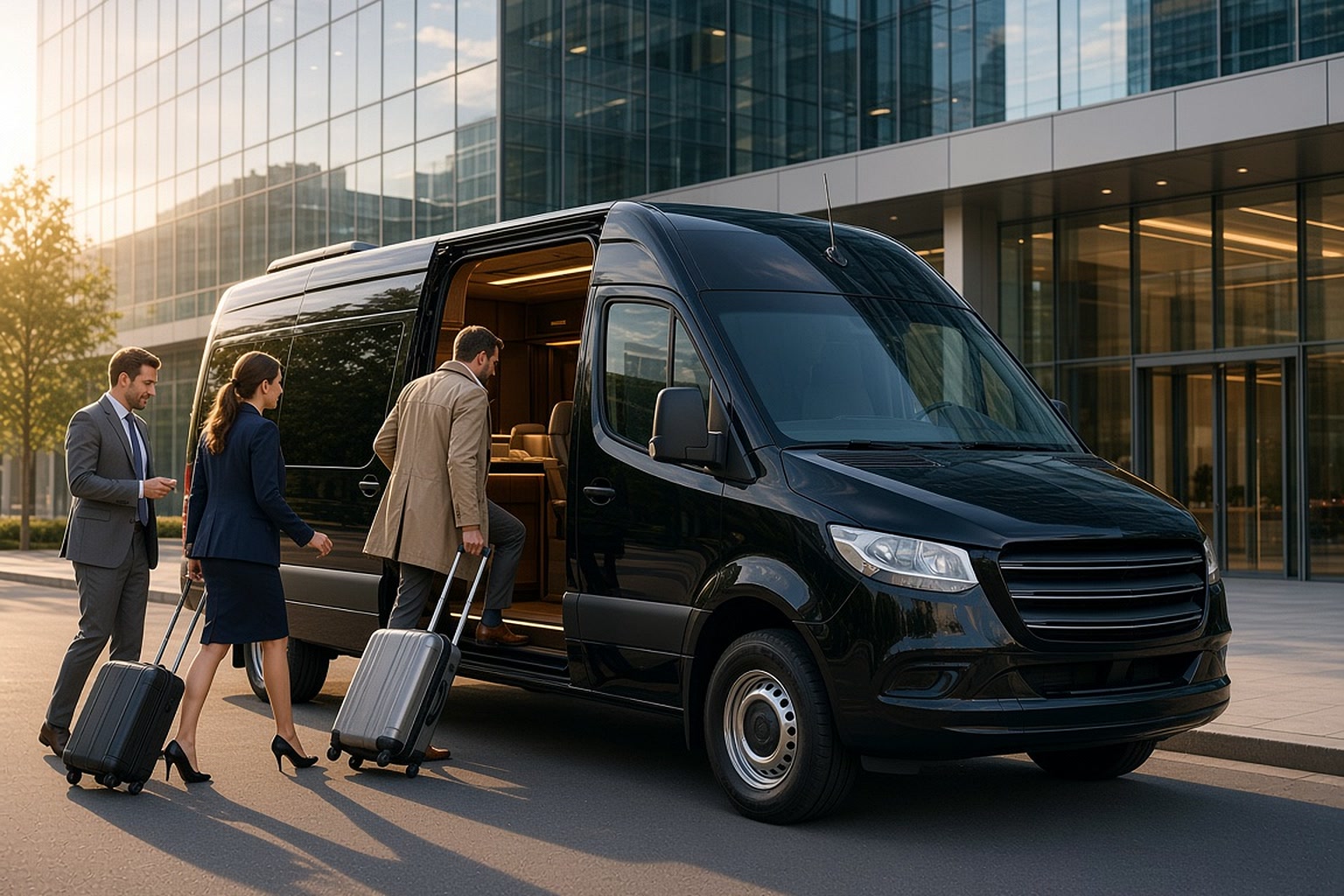
Luggage, not headcount, usually picks the vehicle. A full-size coach has an under-floor bay that swallows a suitcase and a carry-on for every passenger. Sprinters and shuttle buses have modest rear storage, which is how ten travelers with checked bags manage to fill something rated for far more. Send us the bag count alongside the headcount and we'll save you that surprise.
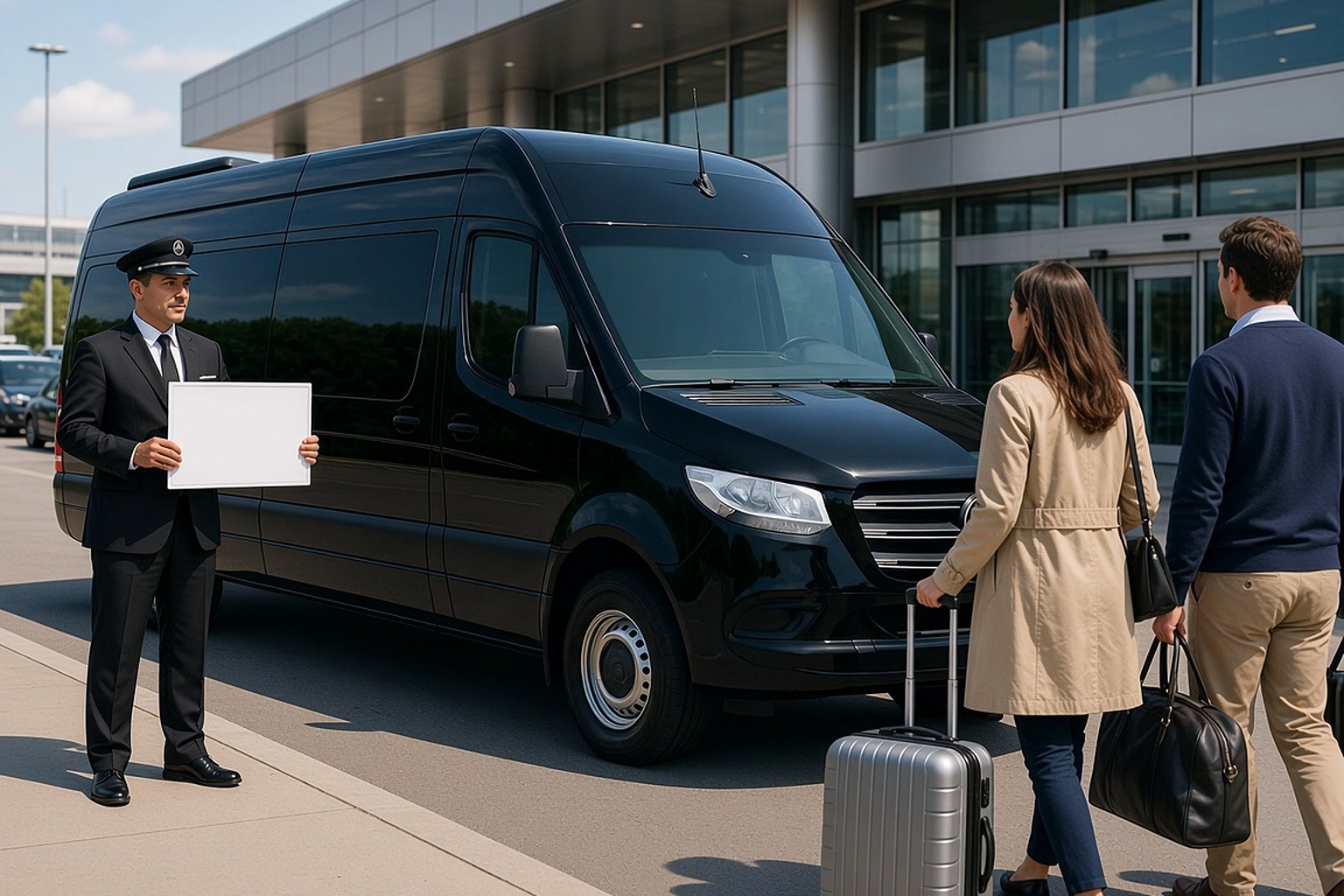
A speaker, a board, or an executive party of ten or fewer is better served by the 10-passenger executive Sprinter than by a coach. For everybody else, the trick is grouping arrivals rather than chasing them: flight details come in at registration, you sort them into 60- to 90-minute bands by airport, and one vehicle covers each band. It beats meeting forty individual flights every time. Our airport transportation page covers meet points, and the airport and corporate shuttle guide goes deeper on terminal logistics. The Houston Airport System keeps current terminal maps for IAH.
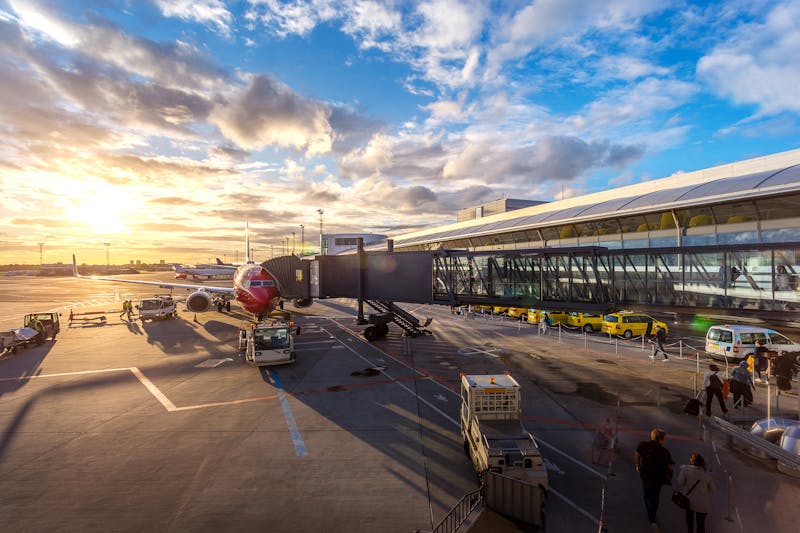 Arrivals grouped into windows by airport, with a vehicle assigned to each window.
Where a 45-foot coach can and can't stop
A coach is 40 to 45 feet long and won't fit where a rideshare tucks in. Three things are worth nailing down before you publish a pickup point to four hundred people.
- The hotel's actual bus door. Plenty of downtown and Galleria properties have a porte-cochère no coach will clear and quietly route buses to a side street. The event manager knows which one — get it in writing.
- Your assigned curb at the venue. Convention centers hand out bus zones by event, so the answer changes with the show. Your venue contact has it.
- Signage, which is on you. A sign with your event name in the window genuinely helps. It just can't be taped or stuck on, so bring something that clips or stands. We don't wrap vehicles.
One more thing that pays for itself: a volunteer at the hotel door that first morning. Nothing a driver can do from the seat replaces a person in a lanyard saying "the GRB bus is that one."
Hours, lead time, and what the number covers
Most conferences run Monday through Thursday, which works in your favor. Sunday through Thursday, plus some daytime bookings, can book at a three-hour minimum against four hours on Friday and Saturday nights. The exception to keep on your radar is spring: March, April, and May Saturdays all come with a six-hour minimum.
According to our Houston inquiry data, about 11% of inquiries with hours attached requested seven to eight hours. Full-day blocks are an ordinary ask around here, and a conference day with a morning push and an evening return tends to land right in that range. We don't have conference-specific figures to publish, so read that as the general pattern and nothing more.
The same data explains why lead time gets serious once your vehicles get big. Only about 5% of inquiries with a group size were for 31 to 40 passengers. Larger vehicles are requested less often and there are fewer of them to go around, so a three-coach morning isn't something to arrange two weeks out. Our guide on how early to book breaks lead times down by season.
Every quote is all-inclusive: the vehicle for the block, a licensed and commercially insured driver, fuel, mileage within Greater Houston, taxes and fees, and the driver's gratuity. A signed contract plus a 50% deposit holds each vehicle, and the balance comes due 7 to 14 days before your first service day. If you run past the end of a block, overtime starts after a 15-minute grace period, and only when the vehicle is free to stay.
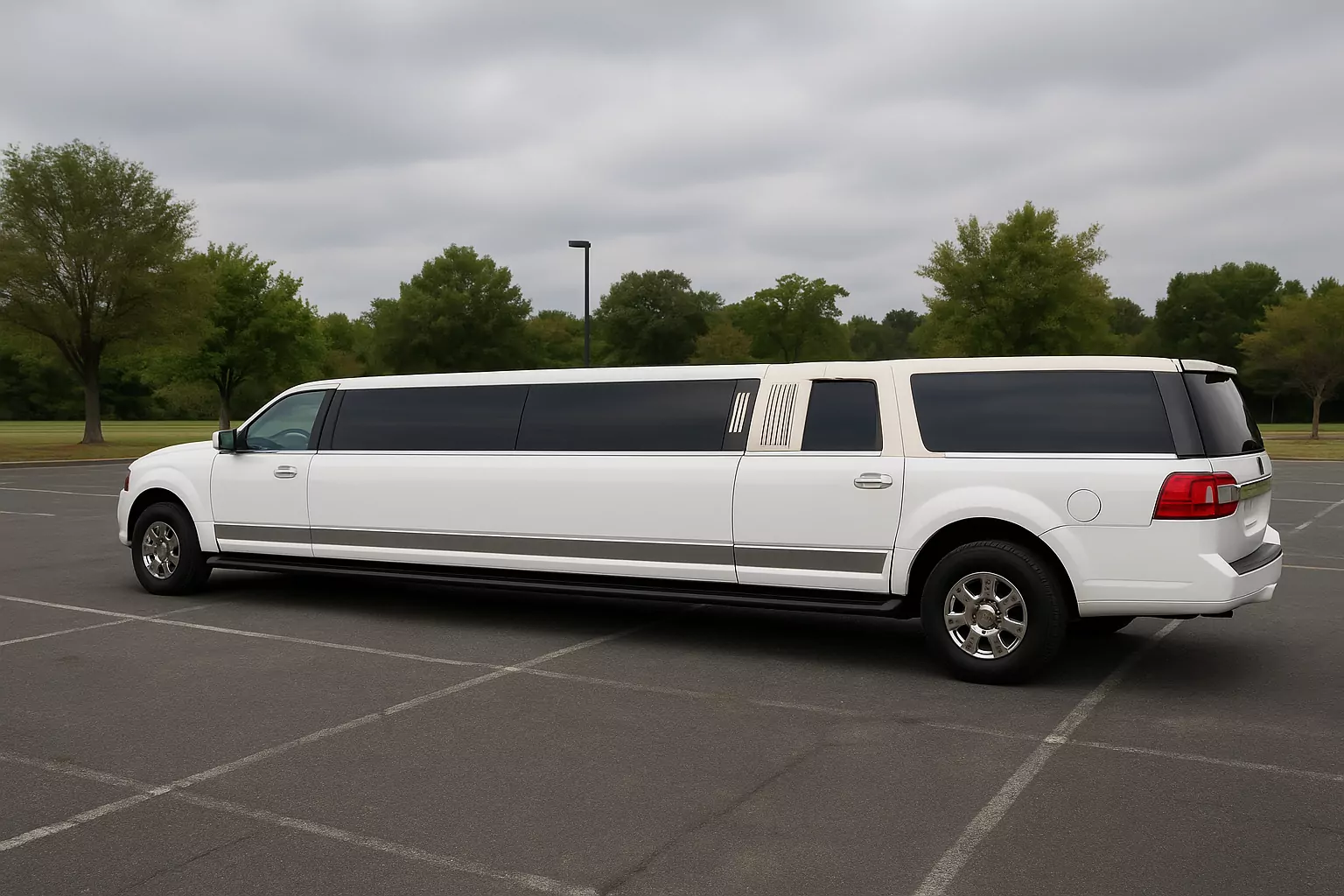
If you're torn on which vehicle type suits a particular leg, the comparison tool puts Sprinter, shuttle, and coach side by side for the same trip.
Free planning tool
Vehicle Compare
Party bus, limousine, Sprinter, shuttle, or coach: compare them side by side for your trip.
Compare vehicles →Want a number for your date?
Send the date, headcount, pickup area, and hours. The quote you get back already includes the driver, fuel, tax, and gratuity.
The one evening that's supposed to be enjoyable
The off-site dinner is where conference transportation stops being logistics. A reception at a restaurant in the Heights or a closing night in EaDo is a single transfer with an unhurried return, and it's the one leg where a 36-passenger party bus can stand in for a coach if you'd like the ride to feel like part of the evening.
Two return departures are worth the trouble here — one early for the people with 6:00 AM flights, one at closing for everybody else. Stops are unlimited inside your booked hours, so that second run costs you time rather than money. Client dinners and awards nights attached to the same meeting are covered on our corporate events page, and if you've bolted a team day onto the program, corporate team building is the one to read.