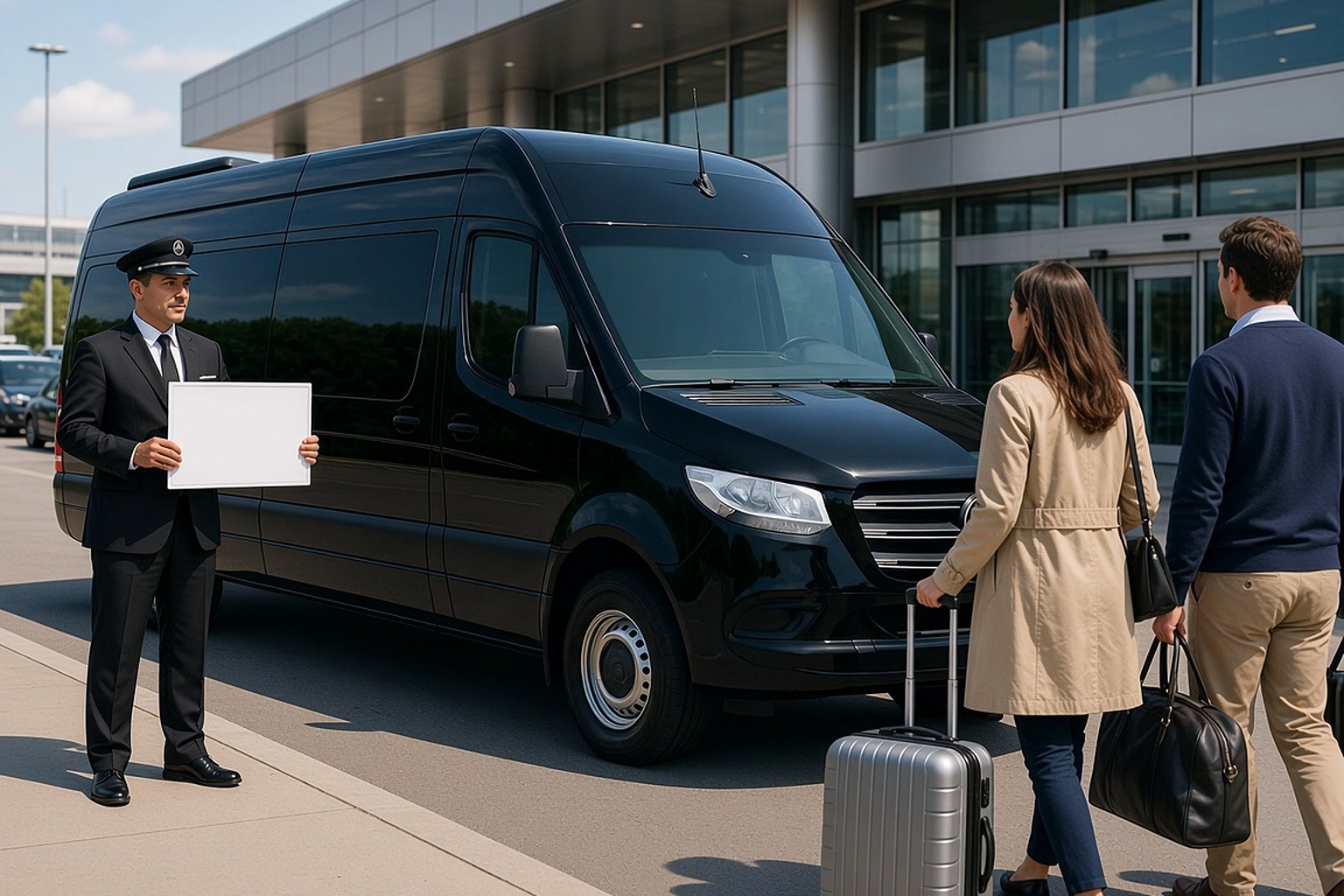
The short version
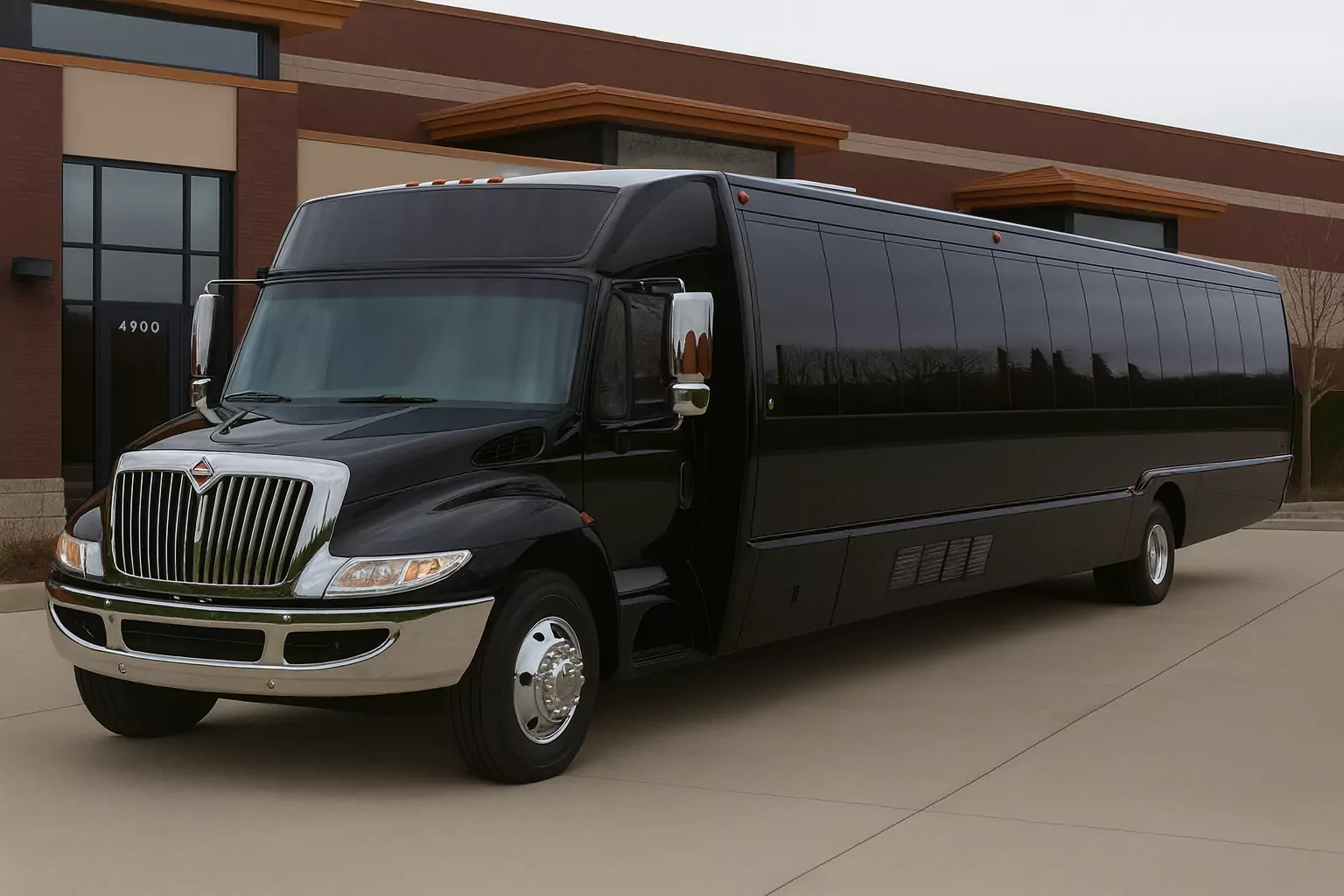
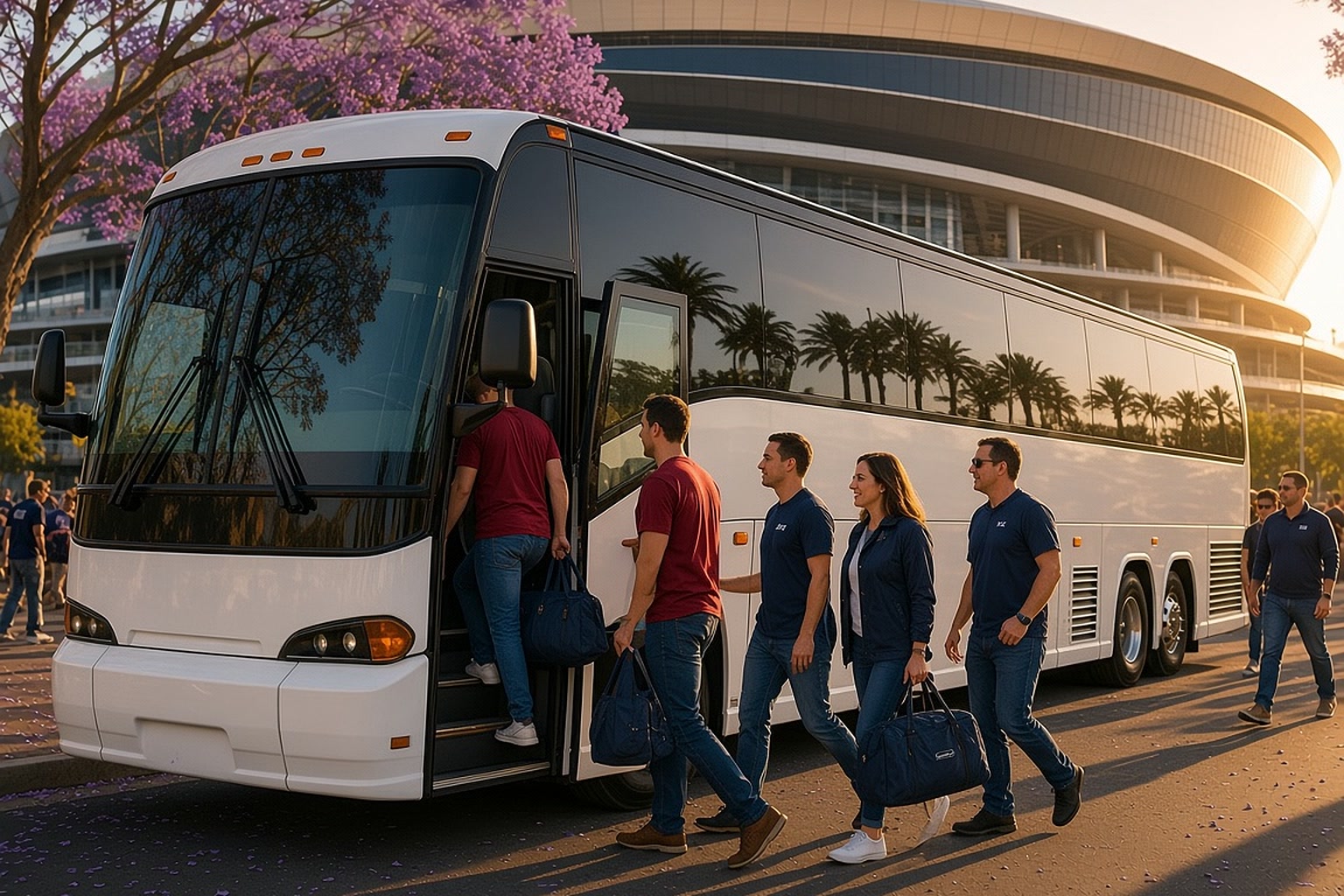
It seats thirty-eight to forty-four, which covers conference hotel loops, off-site dinners, airport group arrivals, and corporate team days. The listing is forward-facing high-back seats, seat belts, overhead racks, climate control, luggage space, and tinted windows, with a professional driver. Coaches differ from one another, so the exact equipment is confirmed on your quote.
Corporate group transport goes wrong in the same handful of ways every time. The coach pulls up at the wrong hotel entrance. Forty people take twenty-five minutes to board instead of ten. Dinner starts late because nobody worked out how long it takes to get a department out of a ballroom and onto a curb.
The coach itself is the easy part. Most of this page is about the planning around it, since that's what decides whether your people arrive when the agenda says they will.
What forty-four seats usually gets used for
Somewhere between thirty-eight and forty-four riders, cars and vans stop making sense and one coach starts doing the whole job. The requests we see most:
- Conference loops. Hotel to convention center in the morning, back in the evening, sometimes a midday run in between.
- Off-site dinners and events. A whole sales team from the hotel to a restaurant, a stadium suite, or a team-building venue.
- Airport group arrivals. A kickoff cohort landing at IAH or Hobby inside a two-hour window.
- Site visits. A client group touring a plant, a campus, or a project site, with a briefing happening on the way there.
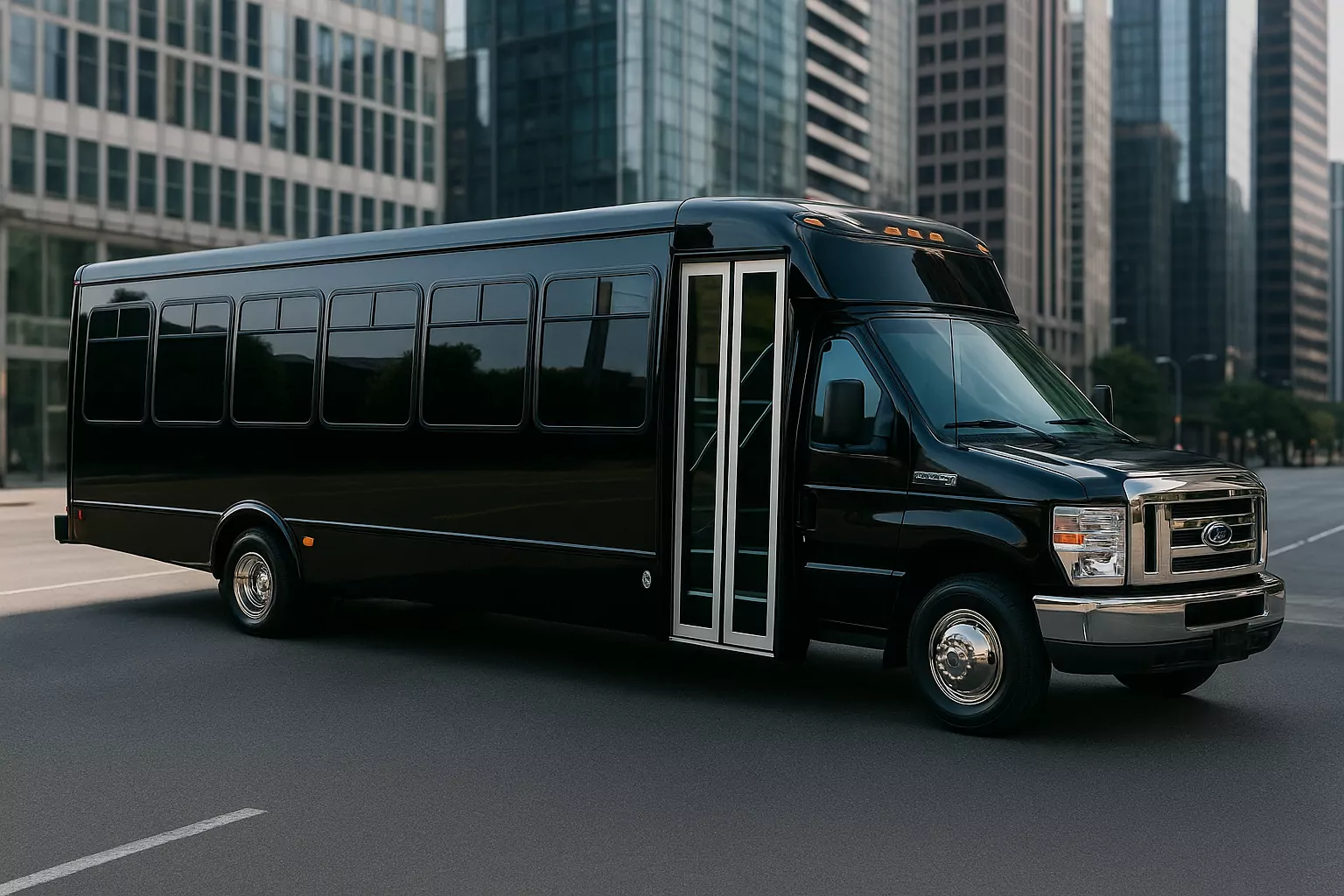
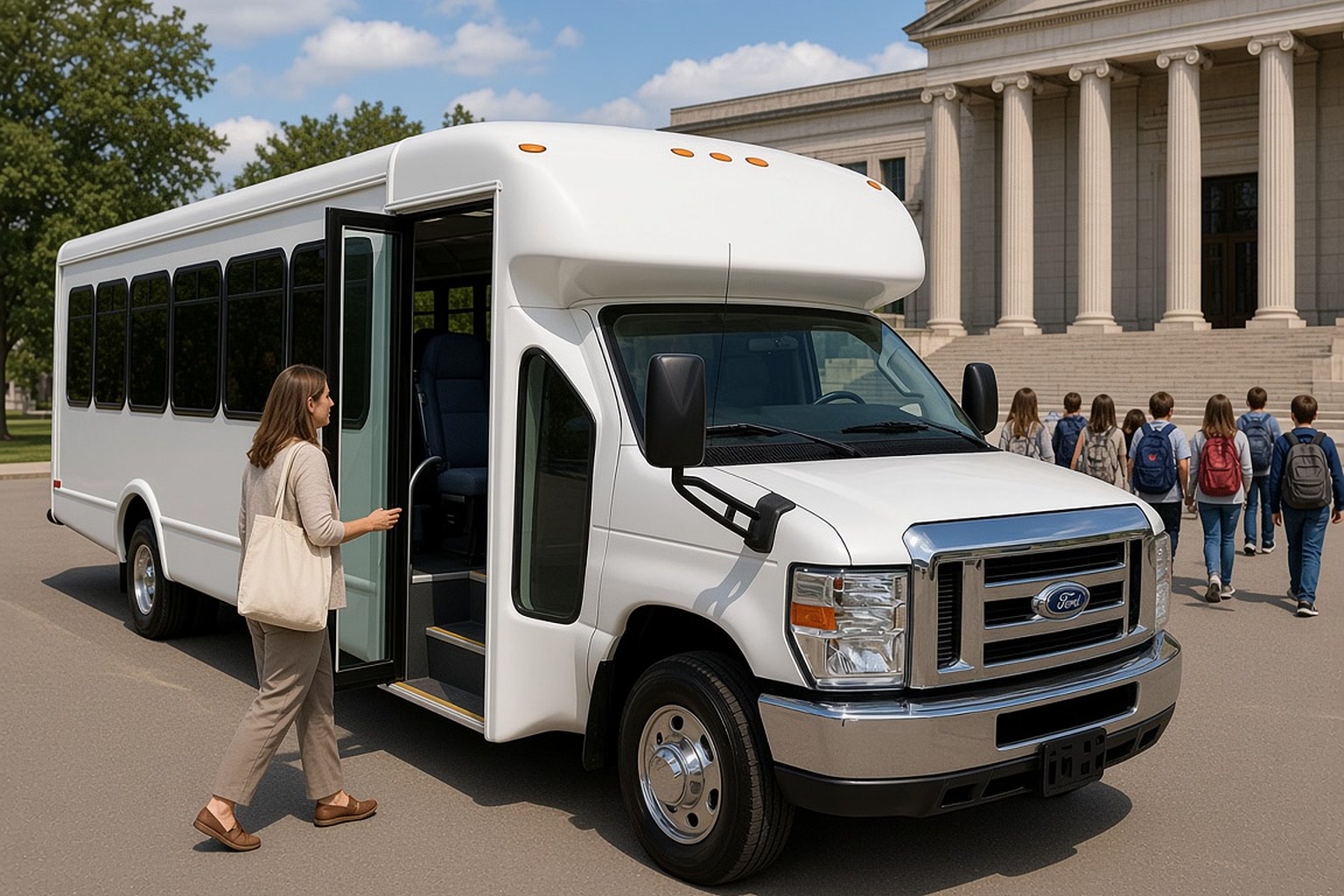
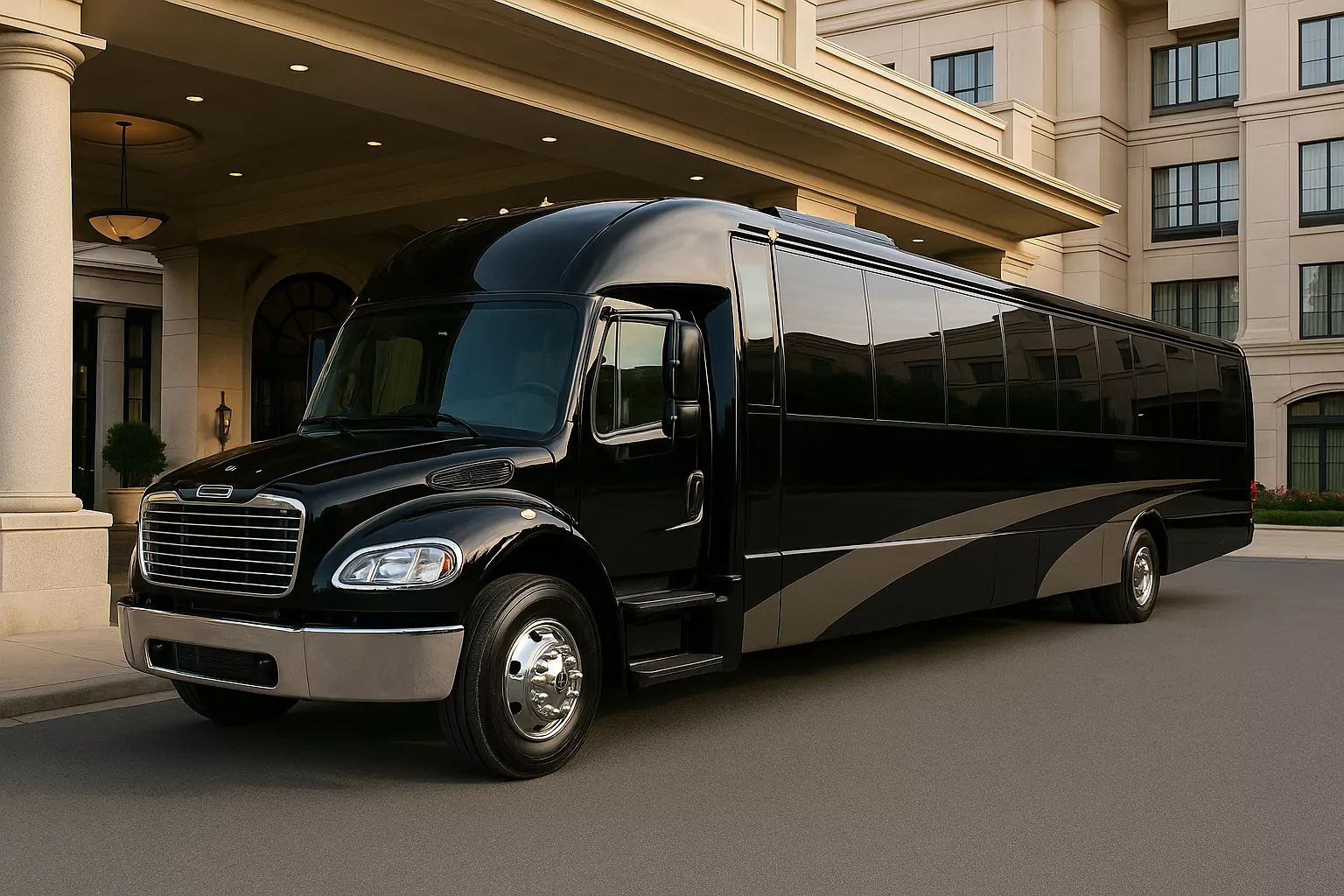 The 44-passenger coach waiting at a hotel entrance.
A conference day, hotel by hotel
Plenty of loops run between downtown hotels and the George R. Brown Convention Center, or from Galleria-area hotels across town. Others serve NRG Park, the Energy Corridor, or The Woodlands. Every one of those has its own staging rules, which is why we ask for the exact hotel entrance and the exact convention center door your attendees will walk out of.
Here's how a three-day conference with two hotels tends to look:
| Time | Run | Note |
|---|---|---|
| 7:00 AM | Hotel A to convention center | Timed to arrive before registration opens |
| 7:30 AM | Hotel B to convention center | Second hotel on the same coach |
| 8:00 AM | Second loop, both hotels | For late risers |
| 12:00 PM | Optional midday run | Only if sessions split across venues |
| 5:30 PM | Convention center to both hotels | The busiest run of the day |
| 6:30 PM | Second return loop | For people who stayed for the last session |
Once attendance runs into the hundreds, the answer stops being a bigger bus and becomes several coaches on a published timetable. Our conference shuttle page covers how those get staffed and signed.
Why coaches this size go early
Big groups just aren't that common. About 5% of inquiries with a group size in our Houston inquiry data were for 31 to 40 passengers, and the practical consequence is worth spelling out: on any given date there are very few vehicles at this size, and they tend to be spoken for well ahead of spring and fall conference season.
Most of what we record comes from social trips, so we have no separate figure for conferences or corporate travel, and we don't publish one. The duration pattern still tells you something. About 34% of inquiries with hours attached requested five to six hours, and about 11% for seven to eight. An off-site with dinner usually lands in the first band. A full conference day lands in the second.
It's a ride people can work through
That's really the difference between this and anything with a dance floor. The coach is listed with:
- Forward-facing high-back seats
- Seat belts
- Overhead racks
- Climate control
- Luggage space
- Tinted windows
- A professional driver
Forty minutes from a Galleria hotel to a client site is long enough to read a briefing pack, clear an inbox, or close your eyes before a three-hour session, and high-back seats facing forward are what make that possible. Overhead racks take laptop bags and jackets, which keeps the aisle clear while forty people board. The luggage space earns itself on an airport run. And climate control stops being a line item and starts being the point on a Houston afternoon when the whole group climbs aboard at once.
Coaches aren't all fitted the same, so the exact equipment is confirmed in your quote for the vehicle assigned. If your plan leans on a restroom, a PA or microphone, screens, or power at the seats, ask when you're getting a quote and you'll get a straight answer about that coach.
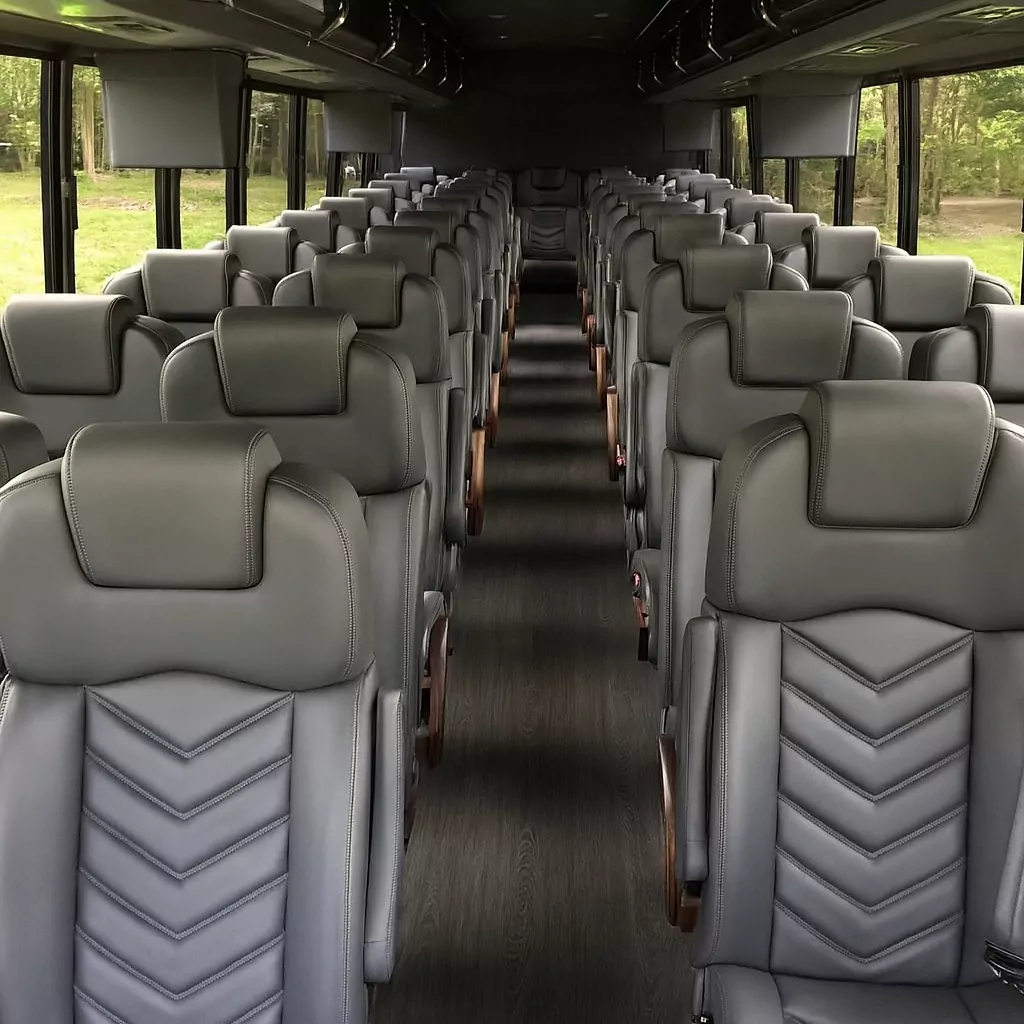 Gray leather high-back seats and overhead racks down both sides.
Coach buses polls: what would you do?
Quick questions, real tallies. Vote to see how other riders answered — one vote per poll, no sign-up.
One coach, or two shuttles?
Corporate planners ask this more than anything else, and the answer depends on the shape of your day.
| One 44-passenger coach | Two 24-passenger shuttles | |
|---|---|---|
| Keeps the group together | Yes | No, split in two |
| Flexible timing | One departure | Two departures, or two hotels at once |
| Curb space needed | One long bay | Two shorter spots |
| Onboard restroom | Ask when quoting | Ask when quoting |
| Luggage | Luggage space and overhead racks | Rear area and racks |
One coach wins when there's a single timed moment everyone has to arrive for. Two 24-passenger shuttles win when you've got two hotels, staggered starts, or a venue whose curb can't take anything long. The vehicle compare tool lines them up if you want to see it side by side.
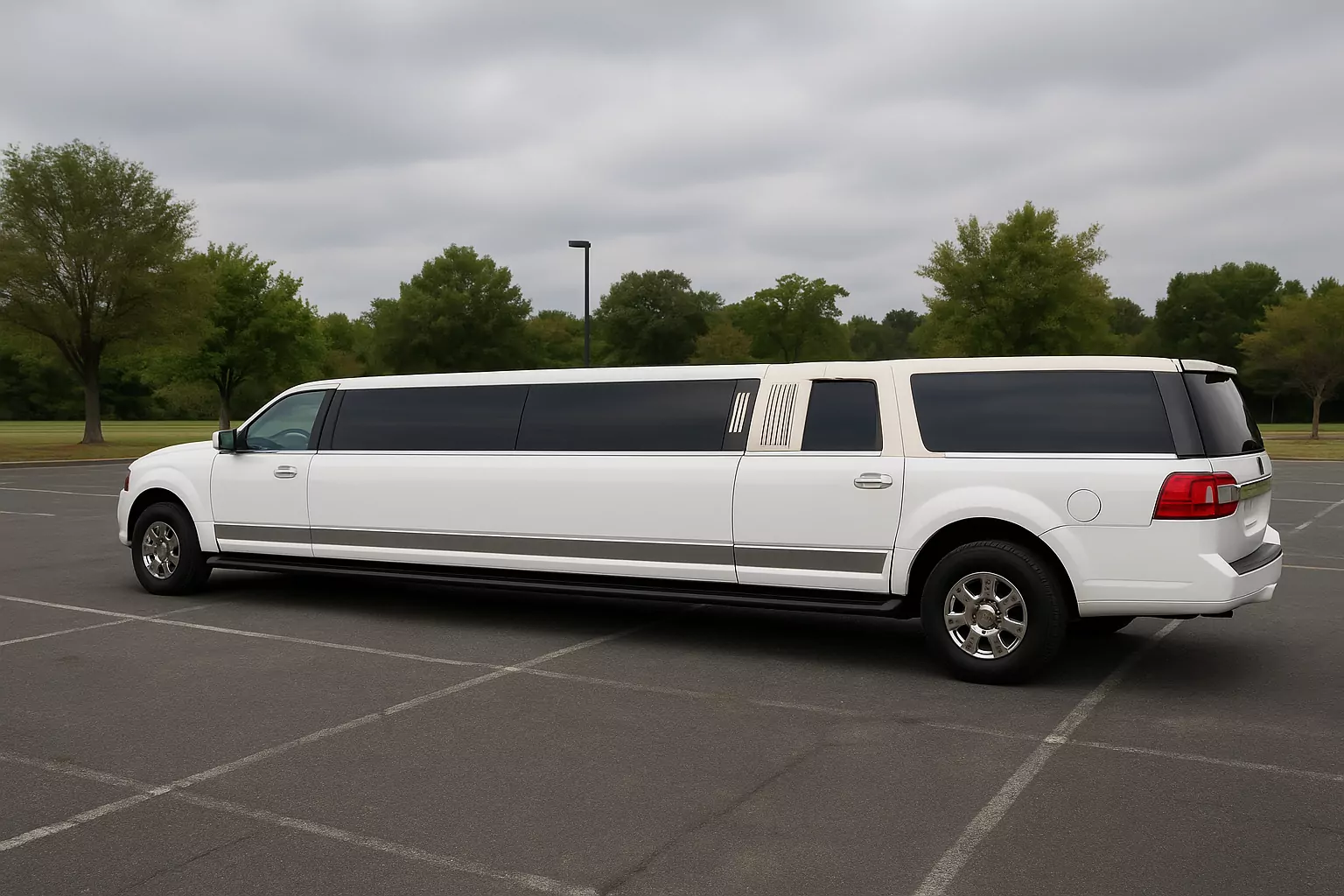
Free planning tool
Vehicle Compare
Party bus, limousine, Sprinter, shuttle, or coach: compare them side by side for your trip.
Compare vehicles →When the whole team lands the same afternoon
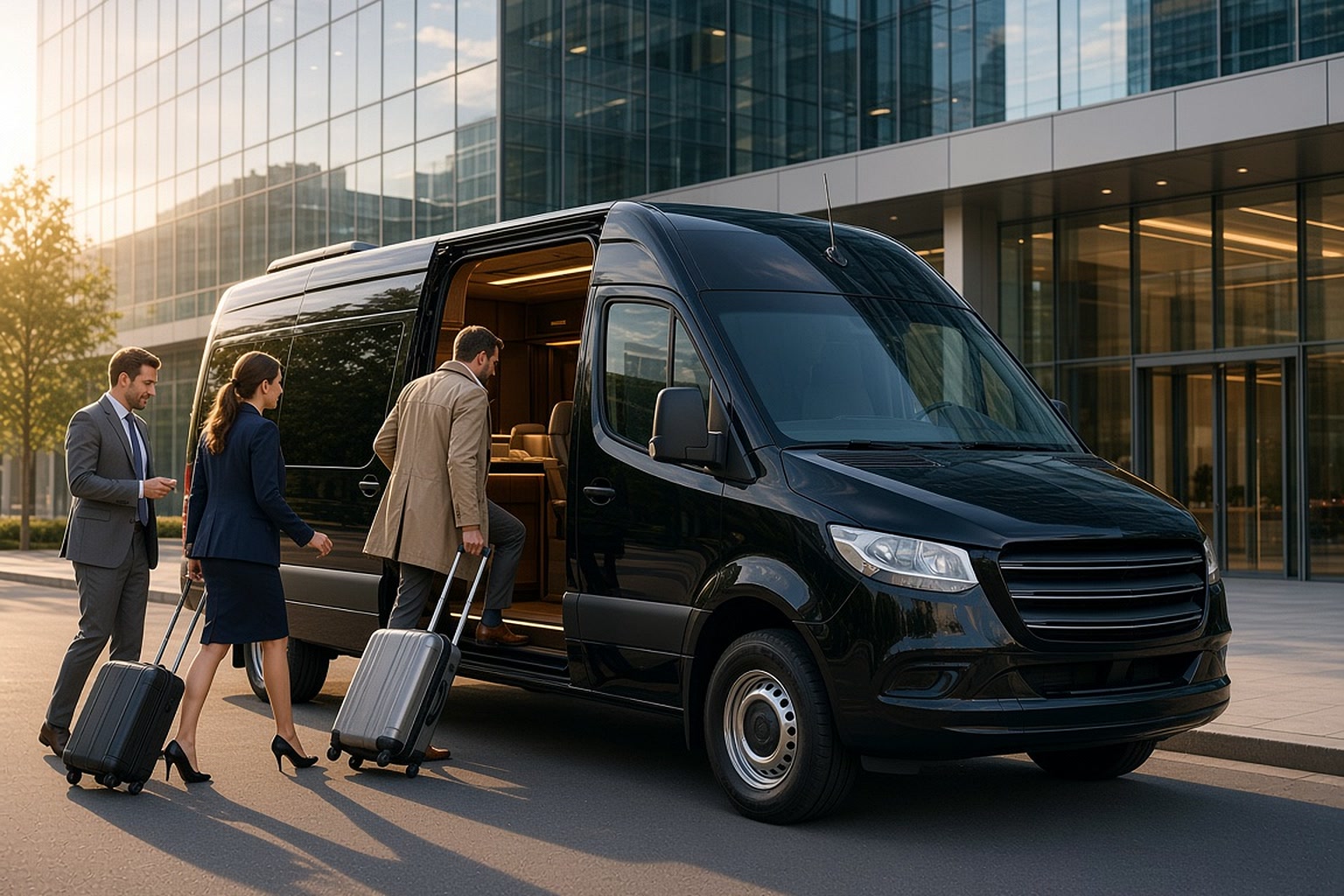
For a sales kickoff or a board meeting, arrivals usually cluster into a few hours, and a coach is the neat answer when most of the group comes down within the same window. When flights are scattered from morning to late evening, several runs with the 10-passenger executive Sprinter tend to waste less time than one coach waiting on a straggler.
Send the flight list with your quote request. We build the pickup around the last flight in each wave and leave room for baggage claim, which is the step people forget. There's more on both in our airport transportation page and the corporate event transportation guide.
The evening event is where the clock slips
Forty people need about ten minutes to board under normal conditions, and roughly twice that when they're filing out of a ballroom after a keynote and stopping to talk on the way. Planning for ten and getting twenty is how a dinner reservation dies.
What the smoothest corporate runs have in common is smaller than you'd expect. One named contact riding with the group who has the driver's number. A departure time announced out loud before anyone steps off the coach. And a return plan agreed in advance — one run at the end, or two if some people will want to leave after dessert.
Team-building days are covered on our corporate team building page, and December's crowded weeks on the holiday party page. If there'll be drinks, the rules are the same as anywhere else on the road: riders have to be 21 or older to drink, anything alcoholic comes from your group rather than from us, and glass stays off the coach.
What to send, and what you get back
A corporate quote comes together fastest from one message with the event dates, hotel and venue addresses, your loop schedule or event times, and the rider count on each run. What you get back is a single all-inclusive figure covering the coach for its booked hours, the driver, fuel, local mileage, taxes and gratuity, with unlimited stops inside those hours. Half holds the dates; the balance settles 7 to 14 days before the first run.
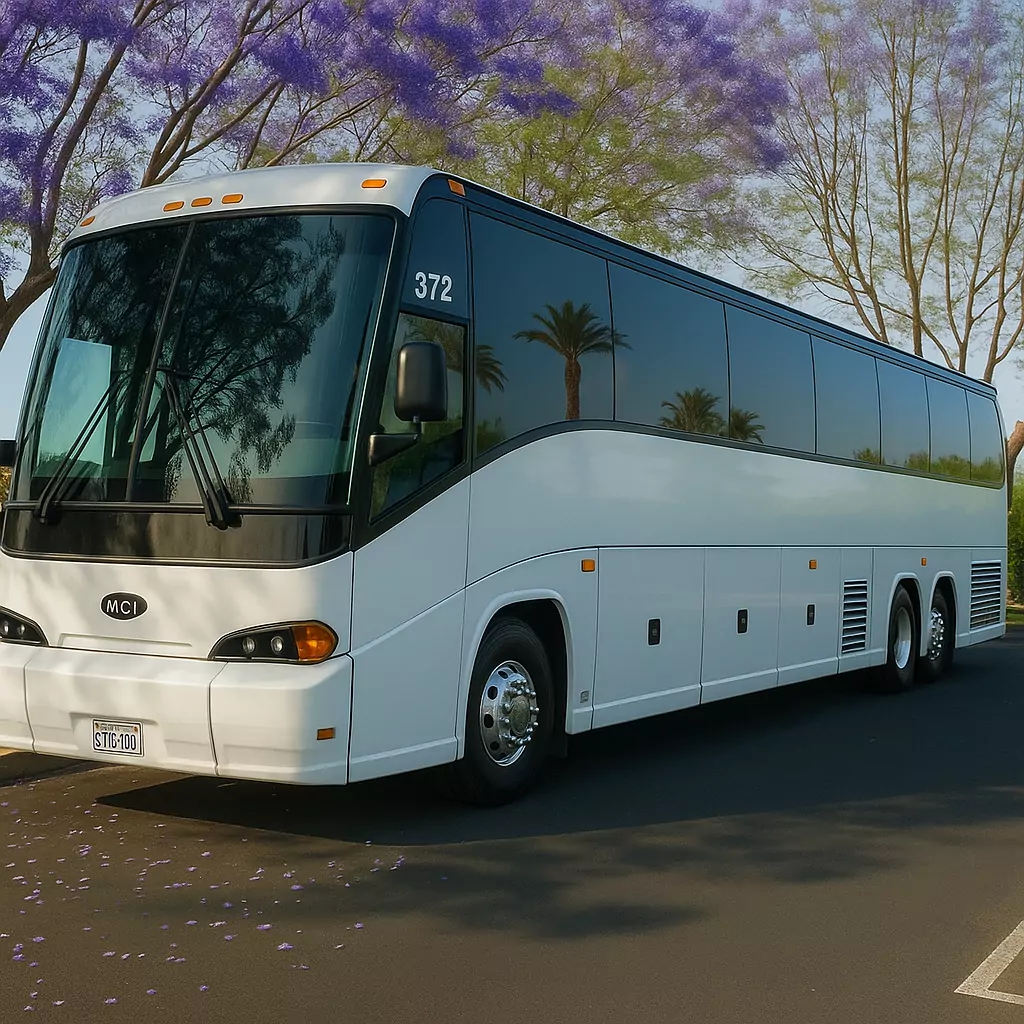
We don't hold coach-specific quote records, so there's no published band for this vehicle — your dates, hours and route set the number. Bigger moves go to the 56-passenger charter bus, and the wider planning picture lives on our corporate events page.
Want a number for your date?
Send the date, headcount, pickup area, and hours. The quote you get back already includes the driver, fuel, tax, and gratuity.