Party Bus In Houston
The short version
Say it in the first line of your quote request if a rider uses a wheelchair or a walker, or just finds steps hard. What a vehicle can do varies from one vehicle to the next, so we check the one you would actually get and tell you before you sign. Forward-facing shuttles and executive Sprinters usually board easiest. Service animals are welcome on every vehicle.
Picture the moment this goes wrong. The bus is at the curb, everyone's dressed, and your mother is looking at three steep steps and a handrail she can't use. There's nothing anyone can do about it right then - not the driver, not us. The door is the door. On a busy Saturday there may be nothing else free to send.
So we'd rather have this conversation months earlier, in an email, while there are still choices. Here's what to tell us, which vehicles tend to suit which needs, and the questions worth putting to us before you sign anything.
Why we ask about this before we ask about anything else
Every vehicle has a door at a fixed height, an entry of a fixed shape, a seating layout that doesn't move, and a capacity that doesn't bend. Those four things settle whether a guest with limited mobility can ride in reasonable comfort, and not one of them can be changed on the night.
Accessibility isn't a property of a category, either. Two shuttles with the same passenger rating can have different entries and different storage behind the seats. That's why we won't answer "is it accessible?" out of a brochure. We look at the vehicle that would actually come to your address on your date, and we tell you what that vehicle has.
And if nothing we can put on your date fits the need, you'll hear that from us straight, before any money changes hands. A no in March is worth a great deal more than a scramble on the evening itself.
What to put in that first message
Alongside the usual - date, pickup area, headcount, hours - these are the details that change our answer:
- How many riders need help boarding, and what kind: a wheelchair, a walker, a cane, or simply difficulty with steps.
- Whether a wheelchair user can transfer to a seat, or needs to stay in the chair for the ride. This is the single most important question, because it decides which vehicles are even possible.
- Whether the chair folds, and roughly how big it is, including any power chair or scooter.
- Companions and helpers. Anyone assisting a rider takes a seat, and capacity ratings are firm, so they count in the headcount.
- Service animals, so the seating plan is ready.
- Anything else the driver should know, such as portable oxygen, a rider who needs extra time, or a guest who should board first.
- The loading spot at each venue, if you know it. Where a bus can safely pull in is not always where a car drops off.
There's a notes box on the quote request form built for exactly this. Or call or text (281) 549-2511 and start there rather than saving it for later.
How the vehicle types compare at the door
Rough guide for riders who find steps or low seats difficult. General descriptions of each body style - the specific vehicle is the thing we confirm with you.
| Vehicle type | Entry | Seating | Tends to suit |
|---|---|---|---|
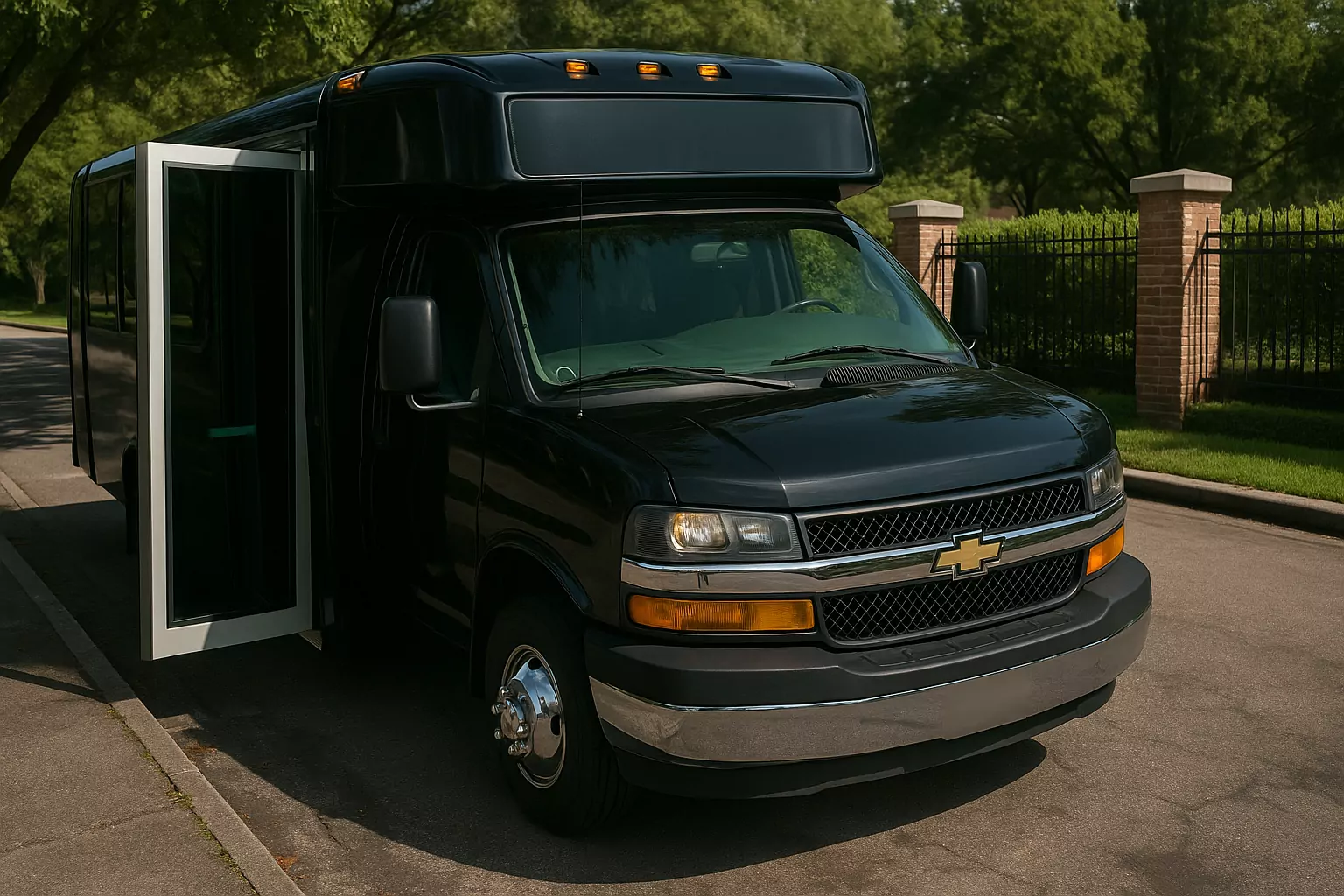
| 24-passenger shuttle bus | Listed with easy-step entry | Forward-facing high-back seats, belts at every seat | Mixed groups where some riders walk slowly or use a walker |
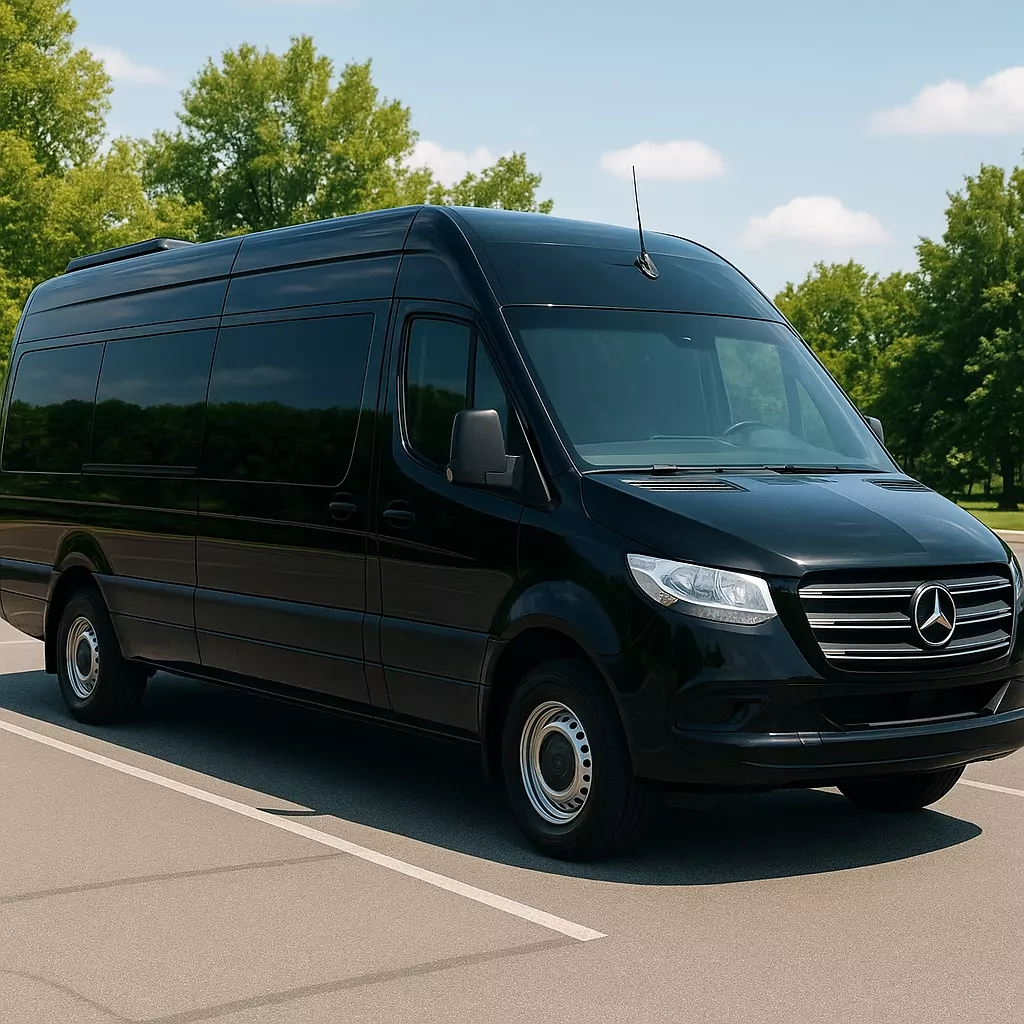
| 10-passenger executive Sprinter | Door you can walk into with stand-up headroom | Forward-facing captain's chairs, belts at every seat | Small groups, older relatives, anyone who dislikes crouching |
| 36-passenger coach bus | Listed with easy-step entry | Forward-facing seats with belts | Larger groups traveling farther |
| Party bus | Several steps up into a raised floor | Sideways perimeter benches | Groups where everyone manages steps comfortably |
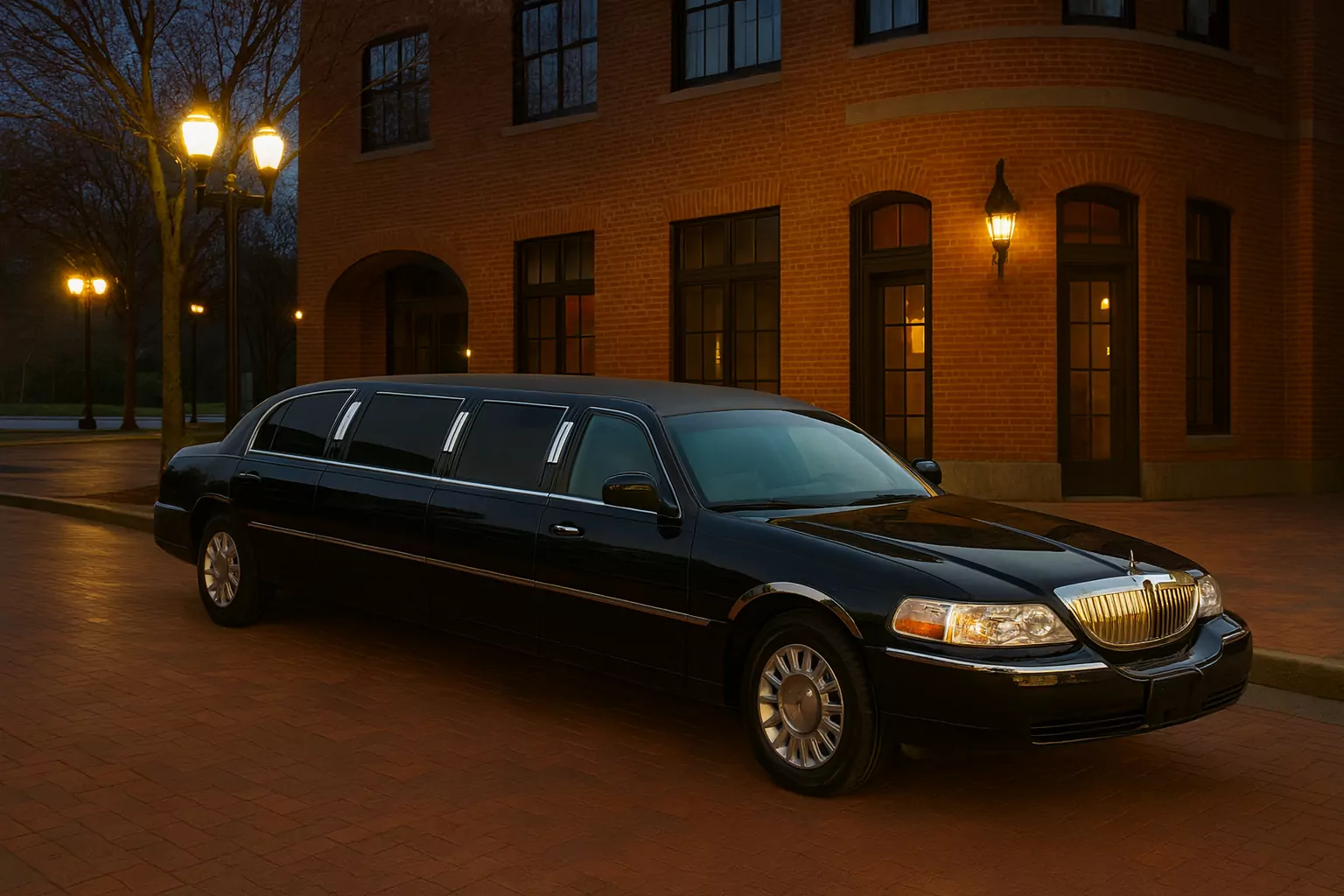
| Stretch limousine | Low door, low seat | Sideways bench seating | Riders who can bend and rise from a low seat |
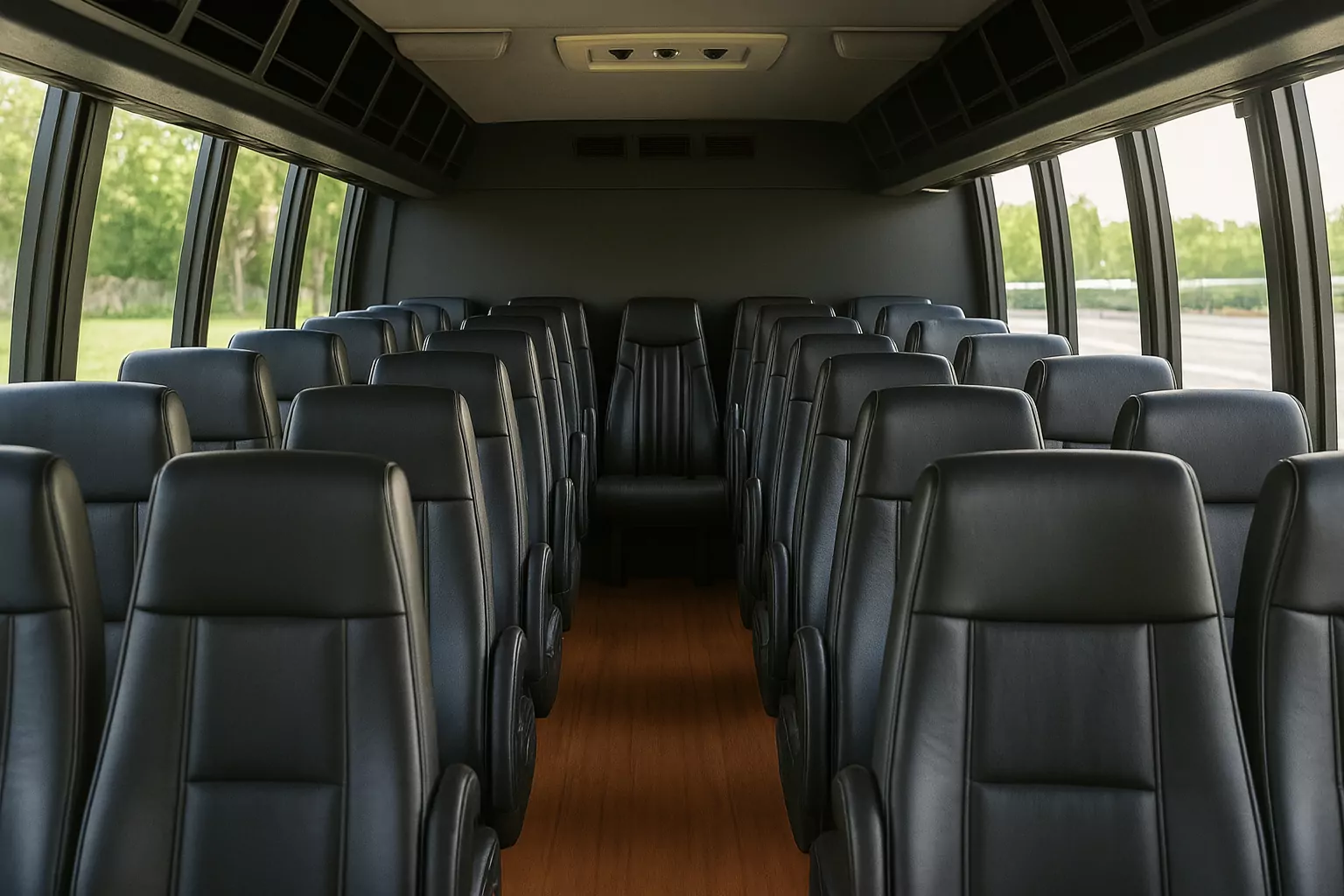 Rows facing front with an aisle down the middle - easier to lower yourself into and easier to get back out of.
The case for seats that face forward
On a party bus or a limousine the benches run along the walls, so you ride sideways. For most people that's half the appeal. But if you need a firm back behind you, a belt that sits the way a car belt sits, or an uncomplicated way of lowering yourself down, a forward-facing row is just kinder. Transferring out of a wheelchair into one is also familiar territory for a lot of riders, because it's close to getting into a car.
The case for watching the step height
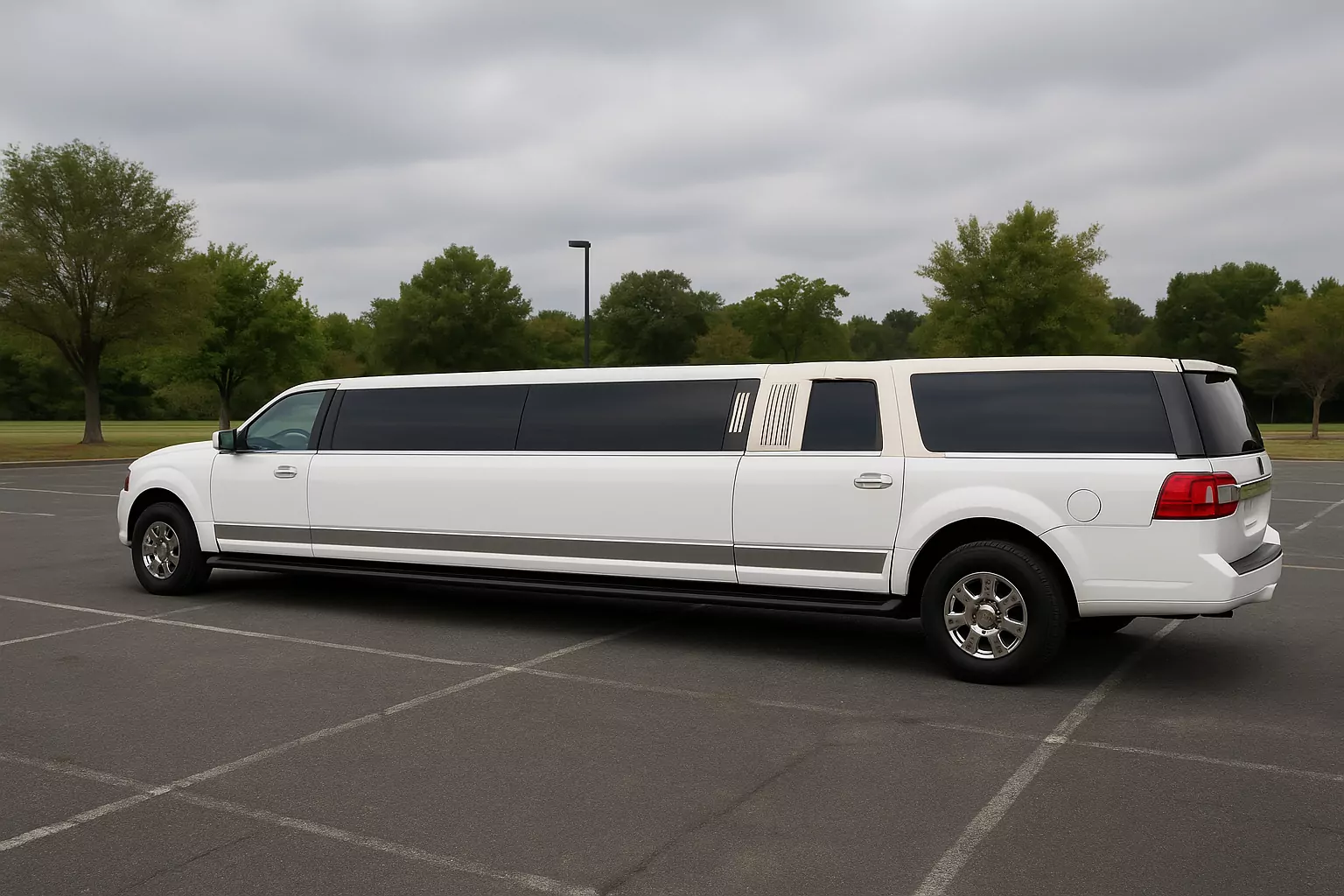
Party buses sit on big chassis with the cabin floor raised well off the ground, so getting in means several steps and a grab rail. Stretch limousines have the reverse problem - the door is low, the seat is lower still, and getting back out means pushing up from nearly floor level. Neither is right for someone who can't do steps or can't do a deep crouch. Sprinters and shuttles land in the middle, which is why they're the first thing we suggest for a group with mixed mobility. If the step is the sticking point, ask us to describe the entry on the exact vehicle.
Free planning tool
Vehicle Compare
Party bus, limousine, Sprinter, shuttle, or coach: compare them side by side for your trip.
Compare vehicles →Wheelchairs: transfer, fold, or stay seated
A guest who can manage a few steps and move into a regular seat has far more doors open to them. Then the chair becomes a storage question instead - the rear area behind a Sprinter or shuttle's seats, or a coach's bay underneath, may well take it. Tell us what kind of chair it is and we'll check.
A rider who needs to stay in the chair for the ride needs a vehicle set up to load and secure one. Whether that exists for your date is something we confirm vehicle by vehicle, when you ask. We won't tell you a vehicle can do it unless we've checked that it can, and we won't try to talk you into a party bus as near enough. If the answer for your date turns out to be no, you'll have that answer before you book, with time to arrange something else.
What group size does to the choice
Numbers narrow things fast. In our Houston inquiry data, about 31% of inquiries with a group size were for ten passengers or fewer. That's executive Sprinter territory, and for a small family outing it's often the easiest thing we can offer an older relative.
Sprinters turn up in only about 7% of inquiries that named a vehicle. If you're planning around a mobility need, that's quietly good news - the vehicle fewer people ask for is the vehicle more likely to be free on your Saturday.
About 13% of inquiries were for 21 to 30 passengers. At that size, a group carrying one or two riders who need an easier entry generally does better in a single shuttle than in a party bus with a car trailing behind it for the people who can't climb aboard.
Coach buses polls: what would you do?
Quick questions, real tallies. Vote to see how other riders answered — one vote per poll, no sign-up.
Where this comes up most
Weddings. Grandparents are far and away the most common reason a family raises this with us. The guest shuttle running hotel to ceremony to reception can be a forward-facing vehicle while the wedding party travels in something else entirely - our wedding transportation page covers how those two pieces fit together.
Funerals and memorials. Families want the immediate family riding together in something calm, and there's usually an elderly parent in that group. The funeral transportation page walks through planning around a service and a graveside stop.
Church outings and senior trips. Seats facing front, unhurried boarding, no party atmosphere. That's the church bus page, covering retreats and weekday runs.
Airport trips. A folded chair or a walker competes with the luggage, so this becomes a storage problem as much as a seating one. The airport transportation page handles sizing by bags.
Nights out. If the group has their heart set on a party bus and one guest uses a cane, that can sometimes work - extra time at each door, a driver who knows to put a hand out. Just talk it through with us first, cane included, rather than hoping.
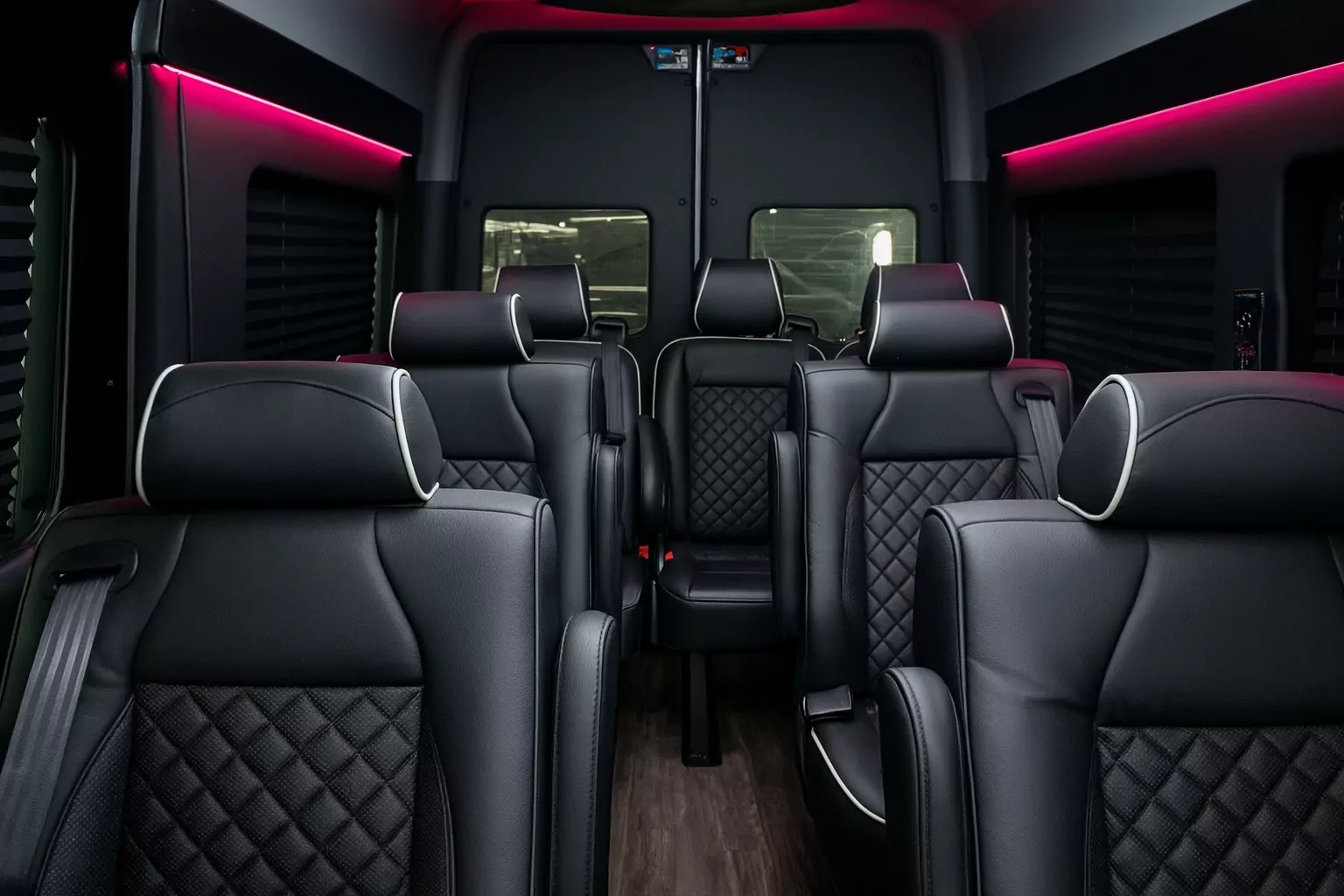 Captain's chairs with belts, sitting at a height that feels like a car seat.
Service animals, helpers, and the clock
Service animals are welcome, always, on every vehicle. Mention one when you book so the driver knows and the seating plan makes room for them. Pets are a separate rule and generally need approval ahead of time.
Helpers take seats. A companion or care assistant rides like anyone else and counts against capacity. If a rider needs someone beside them the whole way, say so and we'll size the vehicle knowing that.
Boarding eats clock, so buy the clock. We already tell groups to expect ten to fifteen minutes at each stop just for loading and unloading. Where a rider needs help every time, assume the top of that range, or past it. Your stops are unlimited inside the booked hours, but the minutes they take come out of the same block. Our guide to choosing party bus hours shows how it accumulates.
Ask about the loading spot, not the drop-off. Where rideshares pull in is rarely where a bus can sit. Hotels, churches and banquet halls often have a side entrance or a porte-cochère with a flat path to the door. Drop that pin into the quote and the driver goes straight to it.
Want a number for your date?
Send the date, headcount, pickup area, and hours. The quote you get back already includes the driver, fuel, tax, and gratuity.
Booking early is part of this
Nothing changes about how a reservation works. A signed contract and a 50% deposit hold the vehicle; the balance lands 7 to 14 days out. What does change is how many vehicles are genuinely candidates for you, and that pool is smaller. Spring Saturdays and December weekends go first, so give yourself more runway than you'd want for an ordinary night out. Our guide to how early to book in Houston sets out lead times by season.
Still weighing up the body styles in general? The comparison of party buses, limos, Sprinters, and shuttles covers the trade-offs for any group, and everything above sits on top of it.
Ready to put this on a bus?
Tell us the date, your pickup ZIP, how many people, and how many hours. We will come back with an all-inclusive number — driver, fuel, tax, and gratuity included.